





What's Happening?
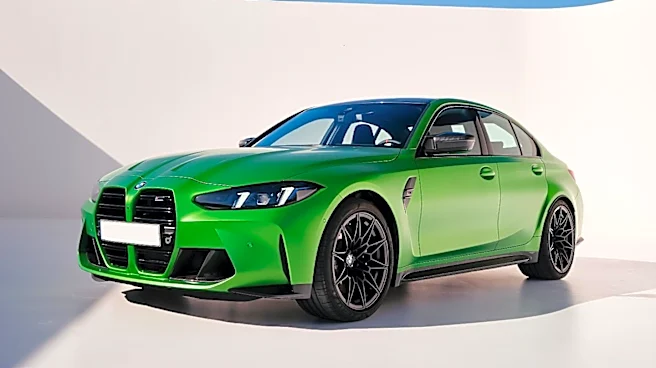
BMW M3 enthusiasts are expressing significant dissatisfaction with the design of the new M3 model, particularly its front grille. Critics argue that BMW has created a 'Frankenstein' M3 by incorporating the nose design from a different model, specifically
the 4 Series, onto the 3 Series chassis. This design choice is seen as a departure from the traditional M3 lineage, which historically maintained a strong visual connection to the standard 3 Series. The core issue, according to these enthusiasts, is that BMW failed to fully commit to its stated goal of separating the 3 Series and 4 Series into unique models. Instead, they believe the M3 has become a hybrid that lacks a cohesive design identity, making it appear 'weird and soft' due to the vertical orientation of the grille, which is perceived as a 'Bugs Bunny' style. This sentiment suggests a perceived betrayal of the M3's heritage and design principles.
Why It's Important?
This design controversy is important because it highlights a significant disconnect between a major automotive manufacturer and its dedicated customer base. For BMW, a brand known for its performance and design aesthetics, alienating a segment of its loyal M3 enthusiasts could have long-term implications for brand perception and sales within this high-performance segment. The M3 has a storied history and a passionate following, and design changes that deviate too far from established norms can lead to a backlash. This situation also reflects a broader trend in the automotive industry where manufacturers are increasingly experimenting with bold and sometimes polarizing designs to differentiate their products. The negative reception from a core demographic could influence future design decisions for BMW's performance lines and potentially impact the resale value and desirability of the current M3 model among purists. It underscores the challenge of balancing innovation with brand heritage and customer expectations.
What's Next?
The immediate future will likely see continued debate among automotive journalists and enthusiasts regarding the M3's design. While BMW has already committed to the current design, the ongoing criticism could prompt the company to re-evaluate its design philosophy for future iterations of its M performance vehicles. It is improbable that BMW will make immediate changes to the current M3 model based on this feedback, given the significant investment in its production. However, the company may monitor sales figures and public sentiment closely to gauge the long-term impact. Competitors in the performance car market may also observe this situation to inform their own design strategies, potentially capitalizing on any perceived missteps by BMW. Over time, if the 'Frankenstein' label persists and negatively affects brand image, BMW might subtly adjust its design language in upcoming models to address these concerns and reconnect with its traditional customer base.
Beyond the Headlines
The 'Frankenstein' M3 debate extends beyond mere aesthetics, touching upon the evolving identity of iconic automotive brands. It raises questions about how much a brand can innovate or deviate from its established design language before alienating its core demographic. This situation could be seen as a case study in brand management, where the tension between modern design trends and historical brand identity plays out. Furthermore, it highlights the power of online communities and enthusiast forums in shaping public perception and influencing brand narratives. The term 'Frankenstein' itself, implying a creation that is unnatural or cobbled together, reflects a deeper concern among enthusiasts about the authenticity and purity of the M3's engineering and design. This sentiment could signal a broader shift in how consumers view luxury and performance brands, prioritizing heritage and consistent design principles over radical changes.



