


What's Happening?
Setting up a home office within a living room requires careful planning to ensure both functionality during work hours and seamless integration into the living space afterward. Key considerations include optimizing screen and chair placement for comfort,
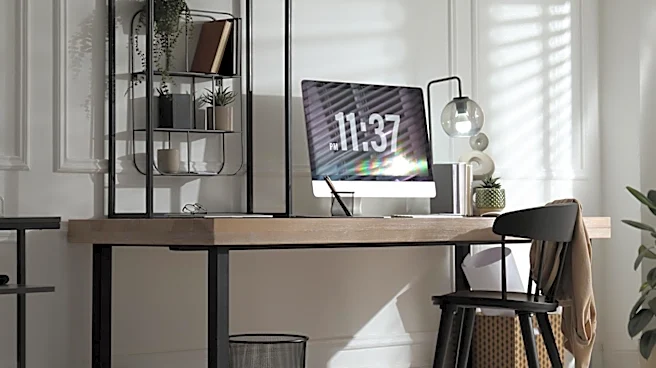
managing glare from windows, and ensuring an easy end-of-day reset. When choosing a desk position, individuals should assess their primary activities; a compact desk might suffice for laptop use, while a separate monitor and papers require more depth. Glare from windows can be mitigated by positioning the desk to the side of a window, and backgrounds for video calls should be checked to avoid bright windows or busy walkways. Mapping chair movement is also crucial, ensuring enough space for standing and movement without obstructing common pathways. Power outlets and cable management are essential for a tidy and safe workspace.
Why It's Important?
The increasing prevalence of remote work in the U.S. has led many individuals to integrate their workspaces into existing living areas, making efficient space utilization and design critical. A poorly planned living room office can lead to discomfort, reduced productivity, and a constant feeling of being 'at work,' even during leisure hours. By carefully considering factors like ergonomics, lighting, and spatial flow, individuals can create a functional office that doesn't compromise the comfort and aesthetic of their living room. This approach helps maintain a healthier work-life balance, preventing burnout and improving overall well-being. For families, a well-integrated office ensures that shared spaces remain usable for all household members, minimizing disruption and maximizing harmony within the home. The ability to 'reset' the workspace at the end of the day is vital for mental separation between work and personal life.
What's Next?
As remote work continues to be a significant part of the U.S. employment landscape, the demand for innovative and adaptable furniture solutions for living room offices is likely to grow. Manufacturers may introduce more modular, multi-functional furniture pieces designed to serve both as office equipment and living room decor. There could also be an increase in interior design services specializing in dual-purpose spaces, offering tailored solutions for integrating workspaces into residential environments. Furthermore, technological advancements, such as wireless charging integrated into furniture and more compact, powerful computing devices, will further facilitate the seamless blending of work and living spaces. The emphasis will remain on creating flexible, aesthetically pleasing, and ergonomically sound solutions that cater to the evolving needs of remote workers.
Beyond the Headlines
The integration of home offices into living rooms reflects a broader societal shift towards more flexible and fluid living arrangements. This trend challenges traditional notions of dedicated workspaces and highlights the adaptability of modern homes. It also underscores the psychological impact of environment on productivity and relaxation; the ability to transform a workspace back into a living area can significantly influence mental well-being. This development may also spur innovation in urban planning and housing design, with a greater focus on flexible layouts that can accommodate diverse activities within smaller footprints. The blurring of lines between work and home life, while offering flexibility, also necessitates conscious strategies to maintain boundaries, making the 'end-of-day reset' not just a practical step but a symbolic one for mental disengagement.