


What's Happening?
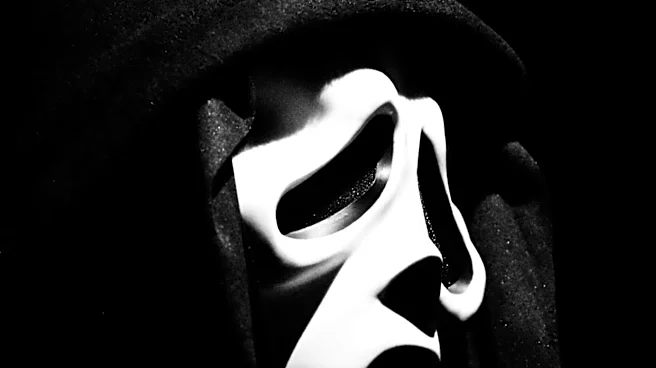
A new perspective is emerging on classic horror films, reinterpreting them through the lens of special needs motherhood. Filmmaker Alison Star Locke, whose daughter has autism, has found new meaning in movies like 'The Exorcist,' 'Insidious,' 'The Shining,'
and 'The Babadook.' She argues that the anxieties and challenges depicted in these films, such as a mother's dedication to her child's well-being, the exhaustion of caregiving, and the struggle against societal indifference, resonate deeply with the experiences of mothers raising children with special needs. For instance, Chris MacNeil's relentless pursuit of help for Regan in 'The Exorcist' mirrors the arduous process of securing support for a special needs child. Renai's sudden immersion into medical care in 'Insidious' reflects the steep learning curve for parents managing complex health needs. Wendy Torrance's struggle to protect Danny in 'The Shining' is seen as a metaphor for navigating the hereditary aspects of disabilities and the need to shield children from external and internal threats. 'The Babadook' is particularly highlighted for its portrayal of grief, sleep deprivation, and the overwhelming nature of caregiving, culminating in the mother's acceptance of the 'monster' as a part of her life, akin to living with a child's lifelong condition.
Why It's Important?
This reinterpretation of horror films is significant because it offers a powerful and empathetic framework for understanding the often-unseen struggles of special needs mothers. By drawing parallels between the fantastical horrors on screen and the real-life challenges of caregiving, it validates the emotional and physical toll experienced by these parents. It highlights the systemic issues, such as bureaucracy, ableism, and lack of community support, that often exacerbate the difficulties of raising a child with a disability. This perspective also challenges conventional narratives around motherhood, moving beyond idealized portrayals to acknowledge the 'duality' of love and resentment, joy and exhaustion. For the special needs community, this artistic lens can foster a sense of recognition and reduce feelings of isolation. For the broader audience, it encourages a deeper understanding and empathy for these experiences, potentially leading to greater societal support and awareness. It underscores how art can serve as a mirror, reflecting personal truths and fostering connection through shared human experiences, even in unexpected genres.
What's Next?
Inspired by these insights, Alison Star Locke is actively developing her own horror films to represent these stories in her unique voice. Her feature film 'The Apology' used metaphor to explore advocating for a child with special needs, and her short film 'Pick Up Time' experimented with tone to convey the high stakes of maintaining a child's routines and therapies. This trend suggests a growing movement within filmmaking to use genre cinema as a vehicle for personal and social commentary, particularly concerning marginalized experiences. Future projects from Locke and other filmmakers may continue to explore the complexities of caregiving, disability, and family dynamics through the lens of horror, offering nuanced portrayals that challenge stereotypes and foster empathy. This artistic direction could lead to a richer, more diverse landscape of storytelling in horror, moving beyond conventional scares to address profound human experiences and societal issues. The goal is to create art that resonates with both those directly affected and a wider audience, promoting understanding and dialogue.
Beyond the Headlines
The reinterpretation of horror films as narratives of special needs motherhood delves into the less obvious implications of caregiving, particularly the psychological and emotional dimensions. It highlights the 'invisible labor' of mothers who navigate complex medical, educational, and social systems while battling personal grief, exhaustion, and societal judgment. The 'monsters' in these films can be seen as externalizations of internal struggles: the fear of failure, the burden of responsibility, the societal pressure to conform, and the emotional isolation. This perspective also touches upon the ethical considerations of how society views and supports individuals with disabilities and their families. It implicitly critiques a system that often places the primary burden of care on individual families, rather than providing robust community and institutional support. By using horror, a genre often associated with confronting fears, these films become a safe space to explore taboo subjects like maternal resentment or the overwhelming nature of love and sacrifice, ultimately fostering a more honest and complex dialogue about family, disability, and societal responsibility.