






What's Happening?
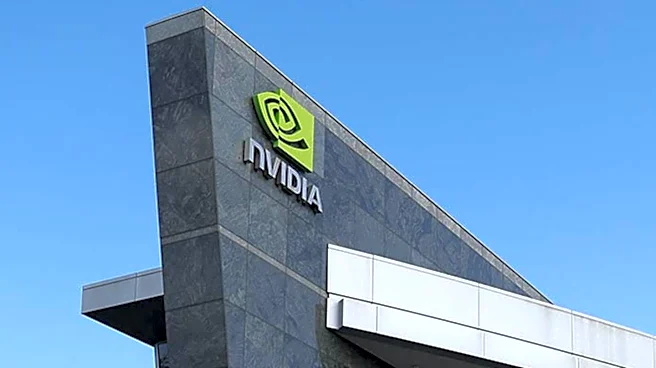
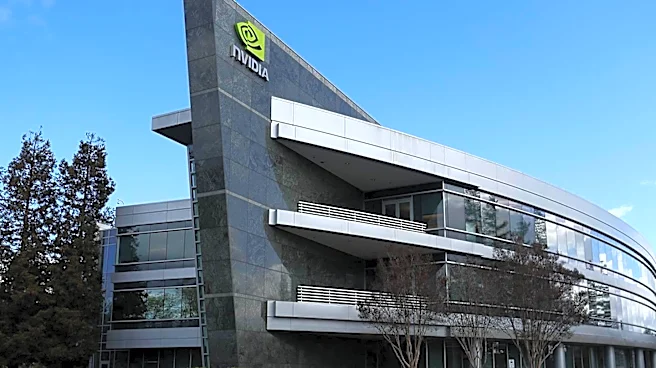
IonQ has achieved a significant milestone in quantum computing by deploying its Superion 256 system at the NVIDIA Accelerated Quantum Research Center (NVAQC). This deployment marks the first on-premise quantum computing system at NVAQC, aiming to integrate
IonQ's full-stack quantum systems directly with NVIDIA's AI infrastructure. The collaboration is designed to tackle the fundamental challenges of scaling quantum processors into advanced quantum supercomputers. According to IonQ CEO Niccolo De Masi, this represents the beginning of an exciting era of hybrid quantum-classical computing. The system will link directly with an NVIDIA GB200 NVL72 system via NVIDIA NVQLink, with workloads orchestrated by the open NVIDIA CUDA-Q platform. This initiative seeks to drive breakthroughs necessary to transform qubits into useful, large-scale quantum supercomputers capable of solving complex problems.
Why It's Important?
This development is crucial for the advancement of quantum computing, particularly in addressing the persistent challenge of scaling quantum processors and integrating them with existing high-performance computing infrastructure. By combining IonQ's quantum hardware with NVIDIA's AI capabilities, the collaboration aims to accelerate the development of quantum supercomputers that can tackle problems currently beyond the reach of classical computers. This has significant implications for various U.S. industries, including financial services, materials science, and drug discovery, where complex simulations and optimizations are critical. The ability to solve these problems faster could lead to breakthroughs in new materials, more efficient financial models, and accelerated development of new medicines. Furthermore, this partnership highlights a growing trend of integrating quantum technologies with AI, potentially creating a new paradigm for computational science and engineering.
What's Next?
The immediate next steps involve leveraging the deployed IonQ Superion 256 system at NVAQC to conduct research and development aimed at scaling quantum processors and integrating them seamlessly with NVIDIA's AI infrastructure. The collaboration will focus on driving breakthroughs in hybrid quantum-classical computing, with the goal of developing large-scale quantum supercomputers. This will likely involve continued experimentation with the NVIDIA CUDA-Q platform for orchestrating workloads and exploring various applications in fields such as financial modeling, materials science, and computational chemistry. The success of this integration could pave the way for broader adoption of quantum computing solutions in commercial and research sectors, potentially leading to the development of new algorithms and applications that harness the combined power of quantum and classical computing.
Beyond the Headlines
This collaboration signifies a deeper strategic shift in the quantum computing landscape, moving beyond theoretical advancements to practical integration with established high-performance computing ecosystems. The focus on hybrid quantum-classical computing acknowledges the current limitations of quantum technology while leveraging the strengths of classical AI infrastructure. This approach could accelerate the timeline for achieving 'quantum advantage' in real-world applications, where quantum computers can outperform classical ones for specific tasks. The ethical implications of such powerful computational capabilities, particularly in areas like drug discovery and financial modeling, will also become increasingly relevant, necessitating discussions around responsible innovation and access. Furthermore, the partnership could influence the development of quantum computing standards and interoperability, as the integration of diverse hardware and software components becomes more common.