






What's Happening?
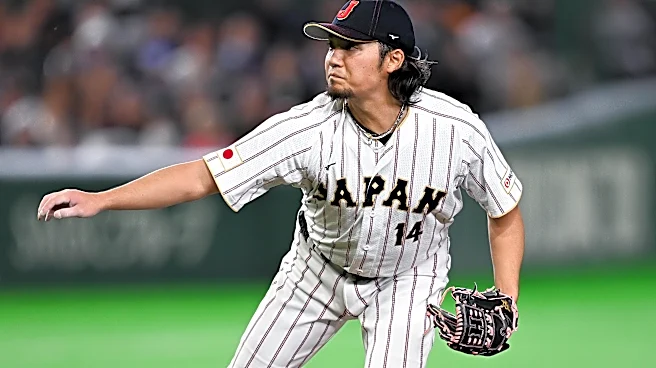
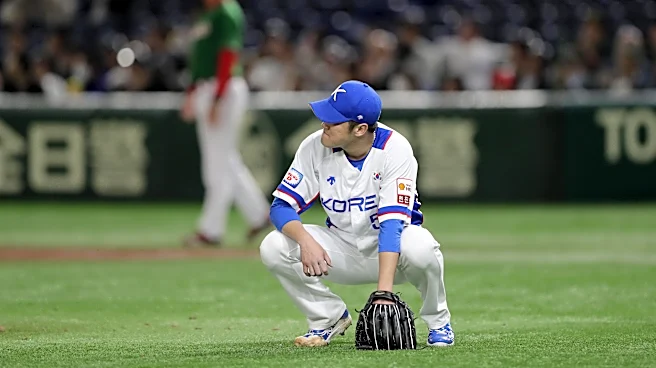
Korea's national baseball team, led by manager Choi Won-ho, lost 1-5 to Japan in the final of the 2026 Asia Professional Baseball Championship (APBC) at the Tokyo Dome on November 15. This defeat marks Korea's second-place finish for the third consecutive
tournament and extends their losing streak against Japan in international professional tournaments to 13 games. The last victory for Korea against Japan in such tournaments was a 4-3 win in the 2015 Premier12 semifinals. Japan's starting pitcher Takahashi Hiroto limited Korea's offense, while Japan's lineup, featuring players like Masaki Tomoya and Nishikawa Misho, secured runs through a solo home run and a three-run homer. Korea's starting pitcher Kim Gun-woo allowed five runs over four innings before being relieved. The Korean offense managed only five hits and one RBI throughout the game.
Why It's Important?
This repeated loss to Japan highlights a significant competitive gap in professional baseball between the two nations, particularly in international tournaments. For Korea, consistently finishing second and extending a long losing streak against a key rival can impact national pride and potentially lead to scrutiny of their baseball development programs and coaching strategies. For Japan, this victory reinforces their dominance in Asian professional baseball, potentially boosting the morale of their players and fans, and solidifying their reputation as a regional powerhouse. The outcome of such high-profile international competitions can also influence sponsorships, media coverage, and the overall popularity of baseball in both countries, affecting economic stakeholders involved in sports broadcasting, merchandise, and tourism.
What's Next?
Following this defeat, Korea's national baseball program may face pressure to re-evaluate its player development and coaching approaches to address the persistent gap with Japan. There could be discussions within the Korean baseball federation regarding future strategies for international competitions, including talent scouting, training methodologies, and managerial decisions. For Japan, this victory will likely be celebrated, and their baseball federation may continue to build upon their successful strategies. Both teams will likely continue to prepare for future international tournaments, with Korea aiming to break their losing streak and Japan striving to maintain their dominant position.
Beyond the Headlines
The consistent performance disparity between Korea and Japan in professional baseball extends beyond mere game results; it reflects deeper trends in sports infrastructure, talent pipelines, and strategic investment in each country. Japan's sustained success could be attributed to a robust professional league, advanced training facilities, and a culture that fosters high-level competition from a young age. Conversely, Korea's challenges might prompt a re-examination of their youth baseball programs, professional league structure, and the integration of international best practices. This ongoing rivalry, while currently one-sided, remains a significant cultural touchstone for both nations, influencing public discourse on national identity and competitive spirit in sports.