




What's Happening?
WWE is making strategic moves to counter All Elite Wrestling (AEW), particularly as AEW's 'Blood & Guts' event approaches. In response to AEW's upcoming show, WWE's NXT brand is scheduled to go head-to-head, and WWE plans to feature John Cena in multiple
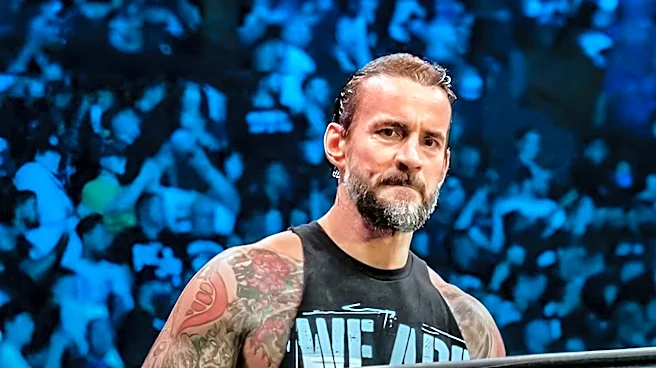
appearances, including a stop at NXT. According to Dave Meltzer on Wrestling Observer Radio, the decision to bring the WWE legend to NXT is to prevent the brand from being 'humiliated' in the ratings battle. Additionally, NXT is generating its own buzz with CM Punk set to appear and engage in a feud with NXT Champion Grayson Waller, a storyline primarily developed through social media. This competitive strategy mirrors past rivalries, such as WWE's 'Attitude Era' against WCW, though the current landscape with AEW involves a rival with significant financial backing.
Why It's Important?
This move by WWE highlights the intensifying competition within the professional wrestling industry, particularly between WWE and AEW. By deploying a major star like John Cena to NXT, WWE aims to bolster its viewership and prevent AEW from gaining a significant advantage during a direct head-to-head broadcast. This strategy underscores the importance of star power and strategic counter-programming in capturing audience attention and market share. The use of social media to build feuds, as seen with CM Punk and Grayson Waller, also demonstrates the evolving methods of audience engagement in modern wrestling. The rivalry benefits fans by offering a wider array of high-profile matches and events, but it also puts pressure on both companies to continuously innovate and deliver compelling content to maintain their competitive edge. The financial strength of AEW suggests that this rivalry will be sustained, leading to ongoing strategic maneuvers from both sides.
What's Next?
The immediate next step is the head-to-head broadcast between WWE NXT, featuring John Cena and CM Punk, and AEW's 'Blood & Guts' event. The ratings from this direct competition will be closely scrutinized by both companies and industry analysts, influencing future programming decisions. WWE will likely continue to leverage its roster of legendary and current stars for strategic appearances to counter AEW's momentum. AEW, in turn, will need to ensure its 'Blood & Guts' event delivers a strong performance to maintain its growing fanbase. The ongoing competition is expected to lead to more aggressive scheduling and talent deployment from both promotions, ultimately benefiting wrestling fans with a richer and more diverse viewing experience. The long-term implications could include further talent acquisitions and innovative storytelling as both companies vie for dominance.
Beyond the Headlines
The rivalry between WWE and AEW, exemplified by WWE's counter-programming tactics, reflects a broader trend in the entertainment industry where established giants face challenges from well-funded, innovative newcomers. This dynamic forces both entities to push creative boundaries and invest heavily in talent and production. The strategic use of veteran stars like John Cena not only draws immediate viewership but also taps into nostalgia, bridging generational gaps among wrestling fans. Conversely, AEW's rise, supported by significant financial resources, allows for experimentation with different wrestling styles and narrative approaches, appealing to a diverse audience. This competition can lead to a 'golden age' for professional wrestling, characterized by higher quality content, increased wrestler opportunities, and more engaging storylines. However, it also raises questions about talent retention, potential burnout, and the sustainability of aggressive competitive strategies in the long run, as both companies strive to outmaneuver each other in a constantly evolving media landscape.