







What's Happening?
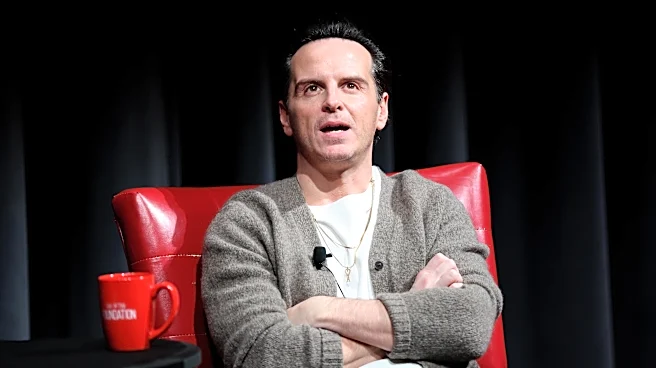
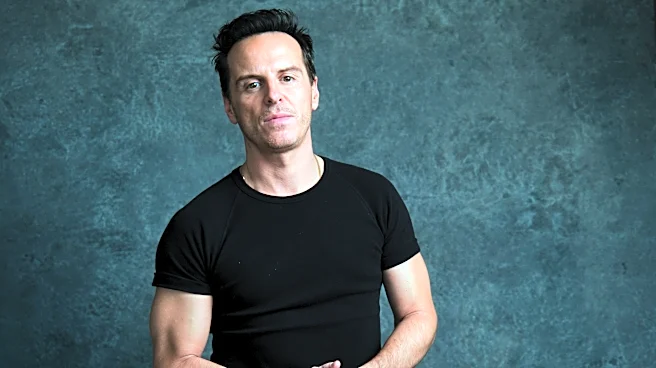
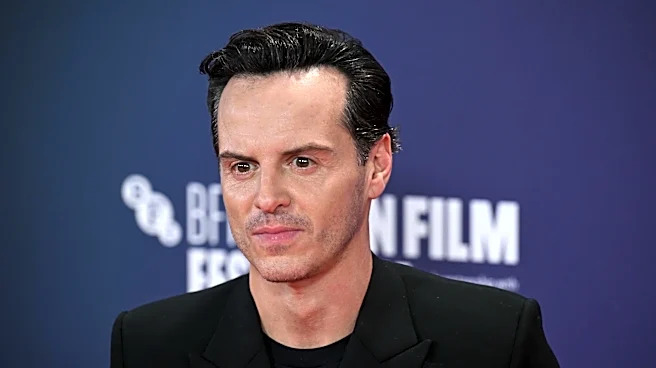
The new movie 'Elsinore' features actor Andrew Scott in the role of Ian Charleson, depicting Charleson's final performance as Hamlet in 1989 at London's National Theatre. At the time, Charleson was dying of AIDS, a condition that made the physically and
mentally demanding role particularly challenging. The film highlights Charleson's decision to embrace life and his craft during his final months, choosing to perform rather than succumb to his illness. Scott, who has played Hamlet on stage 150 times, connects Charleson's personal struggle with the character of Hamlet, exploring who Charleson was before the virus took its toll. The narrative emphasizes Charleson's immense courage and self-worth in taking on such a significant role at a critical juncture in his life. The film also portrays the supportive environment provided by the 'Hamlet' company, which stood by Charleson during his illness.
Why It's Important?
This film is important as it sheds light on the personal and professional challenges faced by artists, particularly during health crises. It celebrates the resilience and dedication of actors like Ian Charleson, whose commitment to their craft can transcend personal suffering. The movie also serves as a historical reflection on the AIDS epidemic and the stigma associated with it, showcasing a period when individuals like Charleson chose defiance and artistic expression over succumbing to their diagnosis. By focusing on Charleson's achievements rather than just his fame, 'Elsinore' underscores the value of artistic integrity and the profound impact of live theater. It also highlights the supportive community within the arts, demonstrating how colleagues can provide crucial emotional and professional backing during difficult times, offering a counter-narrative to potential fears or disdain that might have been expected during that era.
What's Next?
The release of 'Elsinore' is expected to generate discussions around the legacy of Ian Charleson, the impact of AIDS on the arts community, and the enduring power of theater. Audiences may be prompted to reflect on the themes of life, death, courage, and artistic dedication. The film could also spark renewed interest in Charleson's work, including his role in 'Chariots of Fire,' and encourage a deeper appreciation for actors who prioritize their craft over celebrity. Furthermore, 'Elsinore' may contribute to ongoing conversations about how the arts can provide solace, purpose, and a means of expression in the face of adversity, potentially influencing future biographical films that explore similar themes of resilience and artistic commitment.
Beyond the Headlines
Beyond its immediate narrative, 'Elsinore' delves into the deeper implications of an actor's identity and purpose. It explores the ethical dimension of performing while facing a life-threatening illness, questioning how personal struggles intersect with artistic portrayal. The film implicitly challenges societal perceptions of success, distinguishing between fame and genuine artistic achievement. It also touches upon the cultural significance of theater as a space for escape, transformation, and profound human connection, both for the performer and the audience. The portrayal of the 'Hamlet' company's unwavering support offers a powerful commentary on empathy and community within professional settings, suggesting that collective humanism can overcome prejudice and fear, even in challenging historical contexts. This narrative contributes to a broader understanding of the human spirit's capacity for resilience and creativity in the face of mortality.