







What's Happening?
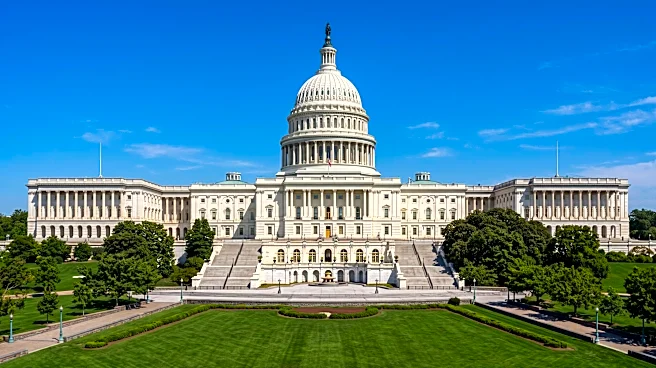
The bipartisan Congressional U.S. Foreign-Trade Zones Caucus recently held its first official meeting on Capitol Hill. Co-chaired by Reps. Aaron Bean (R-Fla.) and Marilyn Strickland (D-Wash.), the caucus aims to educate Congress on how U.S. Foreign-Trade Zones (FTZs)
support American businesses in global markets. The National Association of Foreign-Trade Zones (NAFTZ) helped host the event, which brought together congressional staff, zone administrators, and trade representatives. The discussion highlighted how FTZs provide companies with flexibility in managing imported and domestic goods before they enter U.S. commerce, thereby supporting manufacturing, jobs, investment, and exports. Rep. Bean emphasized the need for Congress to understand tools that help American businesses compete, while Rep. Strickland noted the direct impact of FTZs on communities and workers, stressing the importance of addressing manufacturing, investment, trade, and supply-chain challenges.
Why It's Important?
The establishment and inaugural meeting of the Congressional U.S. Foreign-Trade Zones Caucus are significant for U.S. industries and economic stakeholders. U.S. FTZs, created in 1934, are a federally regulated program designed to encourage domestic manufacturing and distribution, particularly where foreign competitors might have tariff advantages. In 2024, approximately 543,000 U.S. jobs were linked to over 1,300 active FTZ operations nationwide, with exports totaling around $133 billion, representing about 6.5% of U.S. goods exports. This caucus provides a crucial platform for policymakers to understand the real-world implications of trade and tariff policies on American businesses. By fostering a clearer understanding of FTZ benefits, the caucus can help ensure that U.S. companies remain competitive globally, protecting and creating jobs, and attracting investment within the country.
What's Next?
The Congressional U.S. Foreign-Trade Zones Caucus plans to convene multiple times per year, offering ongoing opportunities for congressional members and staff to receive timely briefings and engage with FTZ users. NAFTZ will continue to collaborate with the caucus to support its educational initiatives and encourage broader congressional participation. Future discussions are expected to address key policy priorities, including the implications of ongoing tariff actions under Sections 301 and 232, the U.S.-Mexico-Canada Agreement (USMCA) review, and the need for directed funding for U.S. Customs and Border Protection (CBP) to support the growing usage of the FTZ program. These efforts aim to ensure that U.S. trade policy effectively supports American manufacturing, trade, and supply chains.
Beyond the Headlines
Beyond the immediate policy discussions, the caucus's work touches upon deeper implications for U.S. economic infrastructure and global trade strategy. The program's focus on mitigating tariff disadvantages for U.S. manufacturers highlights the ongoing tension between protectionist measures and the need for global competitiveness. By advocating for policies that restore parity for U.S. exports, especially in the context of agreements like USMCA, the caucus is addressing fundamental challenges in international trade. The emphasis on direct engagement with FTZ users provides a practical, ground-level perspective that can inform more effective and responsive trade policies, potentially leading to long-term shifts in how the U.S. leverages its economic tools to support domestic industries and workers in an increasingly complex global economy.