





What's Happening?
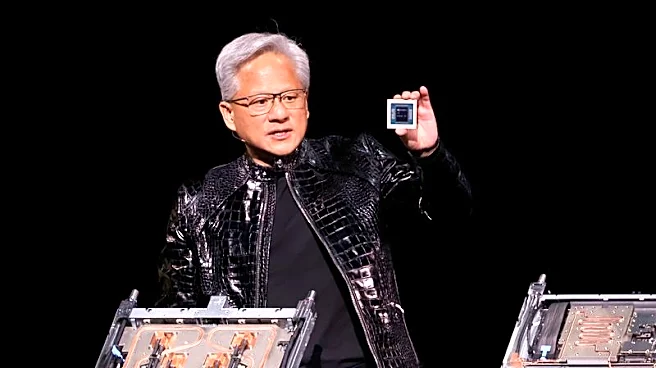
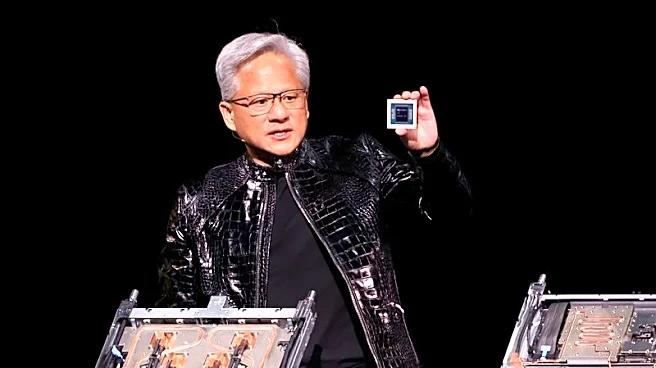
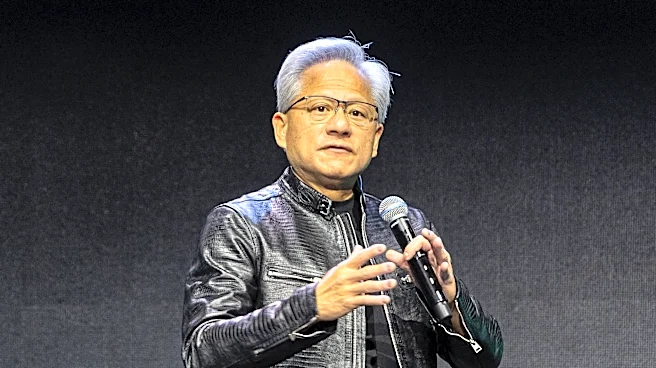
NVIDIA is currently navigating a significant leadership crisis following the unexpected resignation of its CEO, Jensen Huang. This departure comes in the wake of an affairs-and-alleged-spying scandal, which has generated considerable concern within the business
and technology sectors. The situation has led to investor nervousness and widespread speculation about the company's future. The crisis is described as a 'wobbler' – an unforeseen event that challenges established strategies and assumptions. Despite the immediate turmoil, the company's underlying strengths, such as its strong value proposition, brand, and extensive ecosystem of engineers, researchers, and customers, are highlighted as potential factors for resilience. The immediate challenge for NVIDIA's board and leadership team is to restore confidence and address the serious questions raised by the scandal while preserving the company's technological advantages.
Why It's Important?
The resignation of a CEO, especially one as instrumental as Jensen Huang to NVIDIA's success in the AI economy, has profound implications for the company, its investors, and the broader technology industry. NVIDIA's central role in the global AI landscape means that any instability could ripple through the sector, affecting numerous companies reliant on its technology. The incident underscores the critical importance of succession planning and organizational resilience, demonstrating that even highly successful companies are vulnerable to leadership crises. For investors, the situation creates uncertainty regarding future growth and profitability, prompting a re-evaluation of NVIDIA's stock. More broadly, it highlights the potential for personal scandals involving prominent leaders to impact corporate reputation and market perception, even if the company's core products and services remain strong.
What's Next?
NVIDIA's board and leadership team are tasked with addressing the allegations seriously, protecting stakeholders, reassuring customers, and demonstrating the organization's strength beyond any single individual. This involves maintaining the company's innovation advantage, ensuring customer loyalty, and executing its strategy amidst increased scrutiny. The company will need to navigate potential regulatory investigations and competitive threats that may arise from this period of instability. The focus will be on whether NVIDIA can continue to generate cash flow, fund future growth, and sustain its position in the AI market. The decisions made by the leadership in the coming months will be crucial in determining whether NVIDIA emerges stronger, weaker, or fundamentally transformed from this crisis.
Beyond the Headlines
This event brings to light deeper discussions about corporate governance, the cult of personality around CEOs, and the resilience of corporate brands in the face of individual misconduct. It challenges the notion that a company's success is solely dependent on its founder or a single leader, emphasizing the importance of a robust organizational structure and a strong value proposition. The scandal also raises ethical questions about the conduct of high-profile executives and the potential for personal actions to have far-reaching corporate consequences. Furthermore, it prompts reflection on how the market and public perceive and react to such crises, distinguishing between a leader's personal reputation and the intrinsic value and performance of the company itself. The incident serves as a case study in crisis management and the enduring power of a company's core offerings.