








What's Happening?
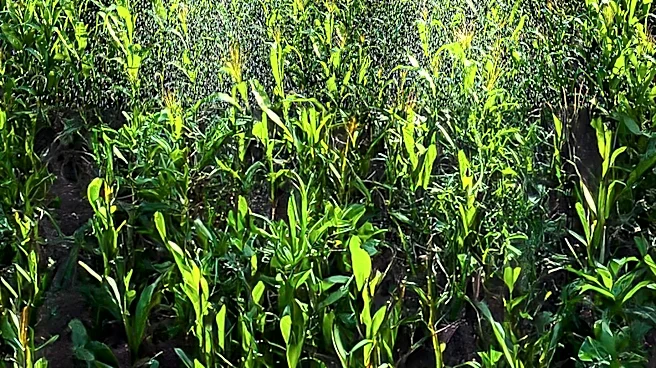
Drones are increasingly being utilized in Canadian agriculture, particularly in the Prairie provinces, as a key component of precision farming. These unmanned aerial vehicles (UAVs) are transforming agricultural operations by providing high-resolution
data for crop monitoring and health assessment. Equipped with advanced sensors, drones can detect plant stress and nutrient deficiencies early, allowing for targeted interventions. This technology supports a shift towards data-driven decision-making, optimizing resource use and improving crop outcomes. Additionally, drones are used for precision spraying, applying fertilizers and pesticides with high accuracy, which reduces input costs and environmental impact. Despite their benefits, drones face challenges such as high upfront costs, regulatory complexities, and technical barriers.
Why It's Important?
The adoption of drones in agriculture represents a significant advancement in farming efficiency and sustainability. By enabling precise monitoring and targeted application of inputs, drones help farmers reduce costs and increase yields, addressing critical challenges such as rising input prices and labor shortages. This technology also supports environmental goals by minimizing waste and reducing the ecological footprint of farming practices. However, the economic benefits are more accessible to larger farms, potentially widening the gap between large and small agricultural operations. Overcoming the barriers to drone adoption, such as cost and regulatory hurdles, will be crucial for broader implementation and equitable access to these technological advancements.
What's Next?
As drone technology continues to evolve, further integration with farm management software and advancements in sensor capabilities are expected. This will enhance the precision and efficiency of agricultural operations, potentially leading to new applications and innovations in the sector. Policymakers and industry stakeholders will need to address regulatory challenges and support initiatives that lower the cost and complexity of drone adoption. Additionally, training programs to develop the necessary skills for data analysis and drone operation will be essential to maximize the technology's potential benefits across the agricultural industry.