




What's Happening?
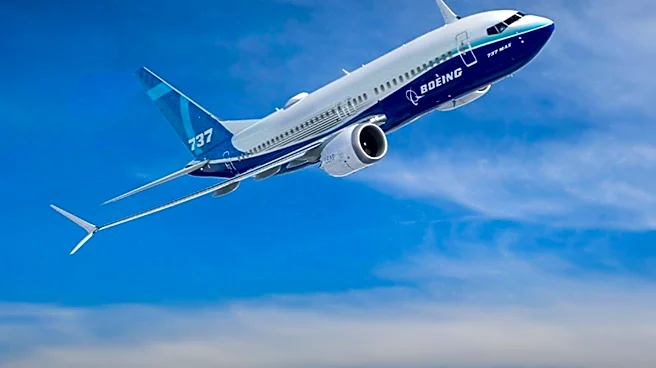
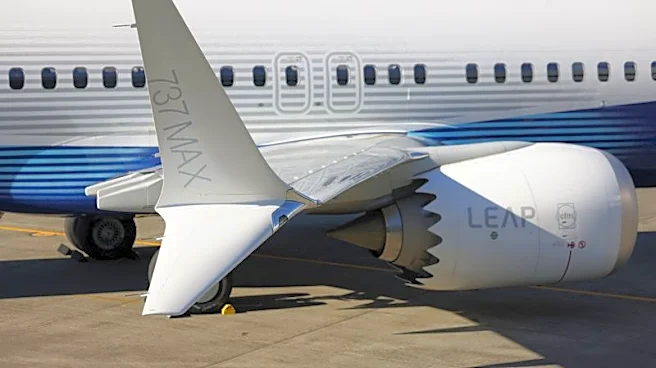
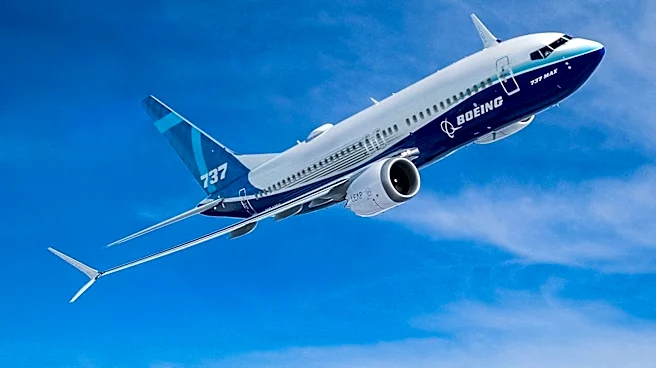
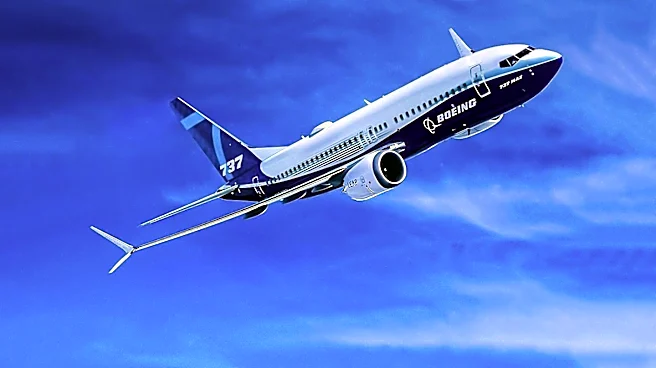
Boeing is emphasizing a strategy of 'getting it right' over rapid production increases for its commercial aircraft programs, including the 737 MAX and 787 Dreamliner. The company aims to stabilize 737 MAX output at 47 aircraft per month before targeting
52 per month in the second half of 2027, a slower timeline than previously anticipated. Production of the 787 Dreamliner is stable at eight aircraft per month, with a goal of ten, but faces delays due to engine availability and premium-class seat certification. The 777-9 program still expects its first delivery in 2027, with ongoing certification work. Boeing reported third-quarter revenue of approximately USD 24.2 billion, a 4% year-on-year increase, but an adjusted loss of 34 cents per share. Management has indicated it will miss its earlier target of delivering 500 aircraft in 2026, pushing financial outlooks further out, with a USD 10 billion annual free-cash-flow target now expected in 2029.
Why It's Important?
Boeing's decision to prioritize quality and stability in its production ramp-up has significant implications for the U.S. aerospace industry and global airlines. The slower pace means airlines will face continued uncertainty regarding delivery schedules, potentially impacting their fleet planning, route launches, and overall operational efficiency. This could lead to airlines extending leases on older aircraft or operating less efficient fleets for longer, affecting their economics. For Boeing, while this approach aims to rebuild confidence and prevent further quality issues, it also means a slower financial recovery. The company's ability to convert its substantial order backlog into deliveries and cash will be delayed, impacting its revenue and cash-generation cycles. Investors have reacted negatively to the revised timelines, reflecting concerns about the prolonged period before Boeing achieves more predictable financial footing. The emphasis on quality is a direct response to past manufacturing and quality-control failures, including the 737 MAX crashes and a recent door plug incident, highlighting the critical balance between meeting demand and ensuring product safety and reliability.
What's Next?
Boeing will continue its efforts to stabilize production across its commercial aircraft programs, with a focus on improving quality controls and consistency throughout its factories and supply chain. The company aims to achieve a sustained output of 47 737 MAX aircraft per month before attempting to reach 52 per month in the latter half of 2027. Progress on the 787 Dreamliner will depend on resolving engine availability and certification delays for premium-class seats. Certification work for the 777-9 will also continue as Boeing targets its first delivery in 2027. The financial community will closely monitor Boeing's quarterly results for signs of progress towards its revised free cash flow targets, with the USD 10 billion annual target now anticipated in 2029. Airlines will need to adjust their long-term fleet strategies based on these updated delivery timelines, potentially leading to continued reliance on existing fleets or exploring alternative leasing options.
Beyond the Headlines
Boeing's current strategy reflects a deeper shift in corporate priorities within the aerospace manufacturing sector, moving from a 'growth at all costs' mentality to one that prioritizes safety and quality, even if it means short-term financial setbacks. This shift is a direct consequence of heightened regulatory scrutiny and public demand for accountability following significant safety incidents. The long-term implications could include a re-evaluation of manufacturing processes across the industry, with a greater emphasis on robust quality control systems and supply chain resilience. Ethically, Boeing's stance signals a commitment to regaining trust, which is paramount for an industry where safety is non-negotiable. Legally, consistent quality improvements could mitigate future regulatory penalties and legal challenges. Culturally, this approach might foster a more deliberate and quality-focused engineering and production environment within Boeing, potentially influencing industry-wide best practices for aircraft manufacturing and certification.