






What's Happening?
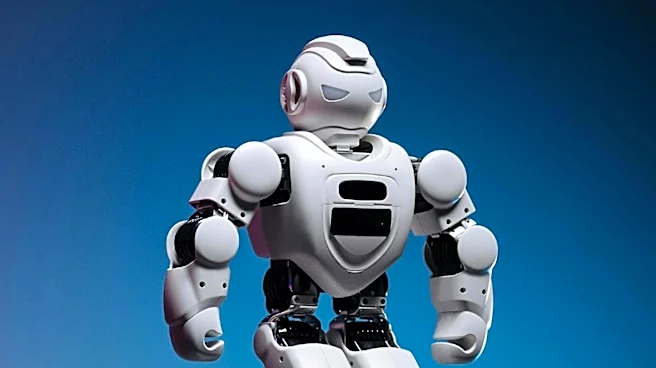
Humanoid, a UK-based robotics startup, has successfully raised $152 million in a Series A funding round, reaching a valuation of $1.35 billion. This funding milestone marks Humanoid as Europe's first humanoid robotics unicorn. The investment round was
led by prominent venture capital firms, signaling strong investor confidence in the company's potential to revolutionize the robotics industry. Humanoid focuses on developing humanoid robots for industrial applications, aiming to enhance efficiency and address labor shortages in sectors such as manufacturing and logistics.
Why It's Important?
The achievement of unicorn status by Humanoid underscores the growing interest and investment in humanoid robotics, a field that has traditionally faced skepticism due to high costs and technical challenges. This development highlights a shift in the robotics landscape, where advances in AI and materials science are beginning to overcome previous barriers. The funding not only boosts Humanoid's capacity to innovate but also positions the UK as a significant player in the global robotics market, attracting further investment and talent to the region.
What's Next?
Humanoid is expected to focus on proving its commercial viability by securing pilot deployments in industries like warehousing and healthcare. Over the next 6-12 months, the company may announce partnerships or pilot programs with major manufacturers or logistics firms. The challenge will be to scale production and demonstrate the cost-effectiveness of humanoid robots in real-world settings. The market's enthusiasm for Humanoid will depend on its ability to deliver functional success and economic value at scale.
Beyond the Headlines
While the funding round is a validation of interest in humanoid robotics, it also raises questions about the broader implications for labor markets and regulatory frameworks. The high valuation reflects a trend of frothy funding rounds in AI and robotics, which can create unrealistic expectations. Additionally, the societal impacts, such as job displacement and ethical concerns about human-robot interaction, need to be addressed proactively by policymakers and industry leaders.