









What's Happening?
Uber has announced plans to introduce a premium robotaxi service in Houston by mid-2027, expanding its partnership with electric vehicle maker Lucid and autonomous vehicle startup Nuro. This initiative follows Uber's activities in the San Francisco Bay
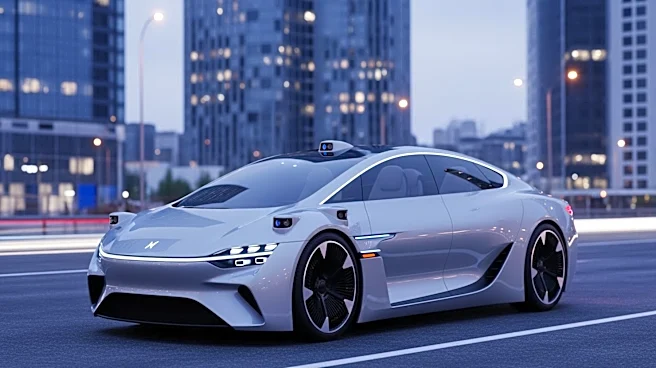
Area, where it is preparing to offer a similar service. The robotaxi fleet will feature Lucid Gravity SUVs equipped with advanced self-driving technology, including high-resolution cameras and lidar sensors. Uber is also establishing a 50,000-square-foot operations hub in Houston to support the launch. The company has invested $500 million in both Nuro and Lucid, committing to purchase a minimum of 35,000 robotaxi-ready vehicles.
Why It's Important?
The expansion of Uber's robotaxi service represents a significant step in the evolution of autonomous transportation, potentially transforming urban mobility. This move could enhance Uber's competitive edge against rivals like Waymo, which already operates commercial robotaxi services in key markets. The investment in autonomous technology aligns with broader industry trends towards automation and electrification, which are expected to reduce operational costs and improve service efficiency. For Houston, the introduction of robotaxis could alleviate traffic congestion and reduce emissions, contributing to the city's sustainability goals.
What's Next?
As Uber prepares for the Houston launch, it will continue testing its autonomous vehicles in real-world conditions to ensure safety and reliability. The company may face regulatory hurdles and public scrutiny regarding the safety and ethical implications of driverless technology. Uber will likely engage with local authorities and stakeholders to address these concerns and secure necessary approvals. The success of the Houston rollout could pave the way for further expansion into other U.S. cities, as Uber aims to establish a widespread robotaxi network.