







What's Happening?
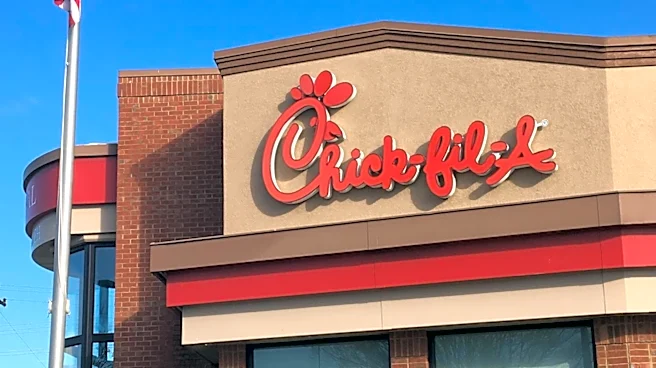
Chick-fil-A continues its long-standing policy of closing all its locations on Sundays. This practice, in place since the company's inception, is not driven by market demand but by the foundational principles of its founder, Truett Cathy. The company states
that the Sunday closure is intended to provide employees with a day of rest and an opportunity to spend time with family and for worship. This consistent weekly shutdown distinguishes Chick-fil-A from many of its competitors in the fast-food industry. While most locations operate Monday through Saturday, opening at 6:30 AM and closing between 10:00 PM and 11:00 PM, specific closing times can vary based on location type, such as standalone restaurants, mall-based outlets, or those in airports and transportation hubs. The company also implements a '10-minute rule,' allowing customers already seated to finish their meals even after official closing time, prioritizing service completion.
Why It's Important?
Chick-fil-A's Sunday closure policy holds significant importance as it reflects a unique business model deeply intertwined with religious values in the U.S. corporate landscape. This policy has become a notable cultural talking point, highlighting the ongoing discussion about the intersection of business operations and religious expression. For employees, it guarantees a consistent day off, which can contribute to better work-life balance and potentially higher job satisfaction, a factor that might attract and retain staff in a competitive labor market. For consumers, it means a predictable operating schedule, though it also requires planning for those seeking Chick-fil-A on Sundays. The policy demonstrates that a company can adhere to its core values and still achieve substantial commercial success, challenging conventional business wisdom that prioritizes continuous operation. This approach influences brand perception, fostering a loyal customer base that appreciates the company's commitment to its principles, while also occasionally frustrating those who desire Sunday service.
What's Next?
Chick-fil-A is expected to continue its Sunday closure policy, as it is deeply embedded in the company's identity and operational philosophy. There are no indications of a shift in this foundational principle, which has been a hallmark of the brand for decades. The company will likely maintain its communication strategies, such as using its official app and website, to inform customers about specific store hours and any rare exceptions due to severe weather or special events. As the debate around business and religious expression evolves, Chick-fil-A's policy will likely remain a prominent example, potentially influencing other businesses considering how to integrate their values into their operational practices. Consumers will continue to adapt their meal planning around this consistent closure, utilizing digital tools to verify operating hours for their local restaurants.
Beyond the Headlines
The Sunday closure policy of Chick-fil-A extends beyond a simple business decision, touching upon broader societal and ethical considerations. It highlights the tension between maximizing profit through continuous operation and upholding corporate values, particularly those rooted in religious beliefs. This practice sparks discussions about employee welfare, suggesting that prioritizing rest and family time can be a viable and even beneficial business strategy, potentially leading to a more engaged and loyal workforce. Furthermore, it raises questions about consumer expectations in a 24/7 economy and whether businesses have a responsibility to provide services at all times. The policy also serves as a case study in brand identity, demonstrating how a consistent and value-driven approach can differentiate a company and build a strong, recognizable brand image, even if it means foregoing potential revenue. It implicitly challenges the notion that business success must always come at the expense of deeply held principles.