
What's Happening?
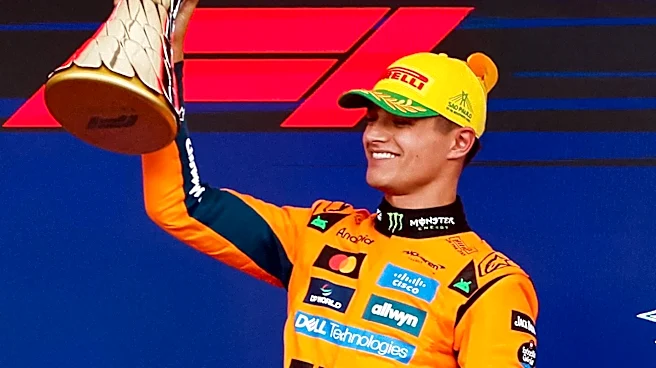
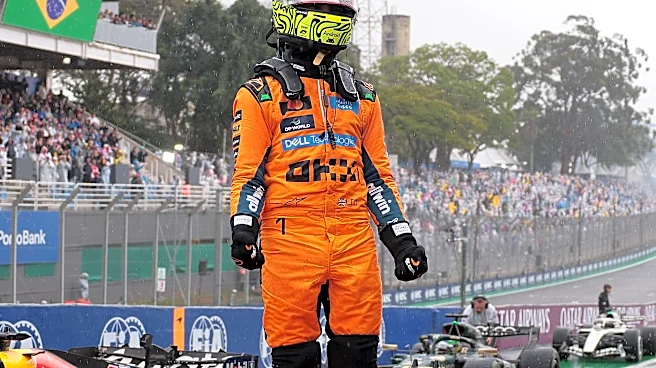
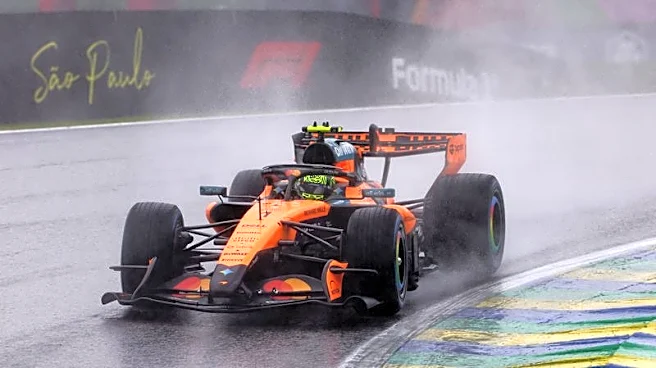
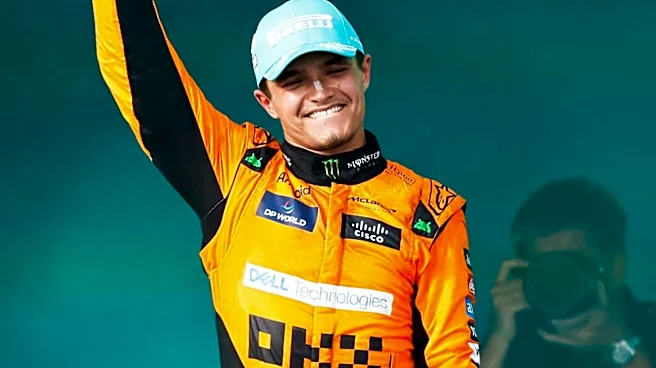
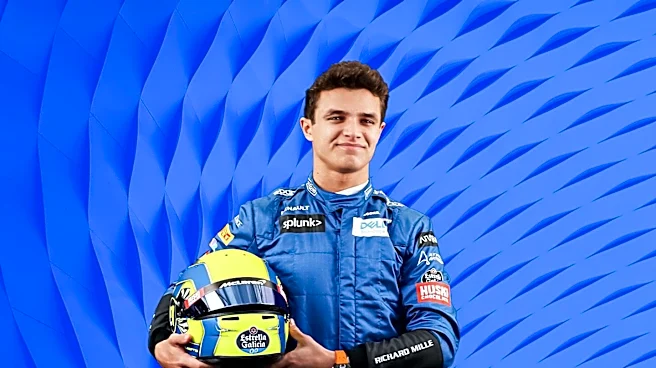
During the podium celebration at the Sao Paulo Grand Prix, Formula 1 driver Lando Norris experienced two concerning incidents. His champagne bottle shattered as he attempted his signature celebration, and shortly after, he walked into the pyrotechnic
display, getting struck by sparks near his face and ear. Norris later explained that champagne had sprayed into his eyes, impairing his vision and causing him to inadvertently enter the pyrotechnics. Former F1 driver David Coulthard has urged Norris to reconsider his celebratory methods, citing the risk of serious injury from repeatedly striking a glass bottle and the potential dangers of the pyrotechnics.
Why It's Important?
This incident highlights significant safety concerns surrounding post-race celebrations in Formula 1. The combination of a shattering glass bottle and uncontrolled pyrotechnics poses a risk not only to the drivers but potentially to other personnel on the podium. While Norris escaped serious injury, the event serves as a reminder of the need for stringent safety protocols in all aspects of sporting events. For McLaren, ensuring the well-being of their driver is paramount, and such incidents could lead to a review of how podium celebrations are managed to prevent future occurrences and protect athletes.
What's Next?
It is anticipated that the FIA and race organizers will review the safety procedures for podium celebrations, particularly concerning the use of pyrotechnics and the handling of champagne bottles. David Coulthard's public plea to Norris suggests that there will be increased scrutiny on driver behavior during celebrations. Norris himself may be advised or choose to modify his celebratory style to mitigate risks. This incident could lead to updated guidelines or stricter enforcement of existing rules to ensure the safety of all individuals involved in post-race ceremonies.
Beyond the Headlines
The incident transcends a mere safety concern, touching upon the culture of celebration in high-stakes sports. The desire for dramatic and memorable podium moments often pushes the boundaries of spectacle, but this event underscores the critical need for safety to remain the top priority. It prompts a discussion about the responsibility of athletes to consider the risks of their actions, even in moments of triumph, and the role of event organizers in creating a safe environment without diminishing the excitement. The balance between tradition, entertainment, and safety will likely be a key consideration moving forward.