




What's Happening?
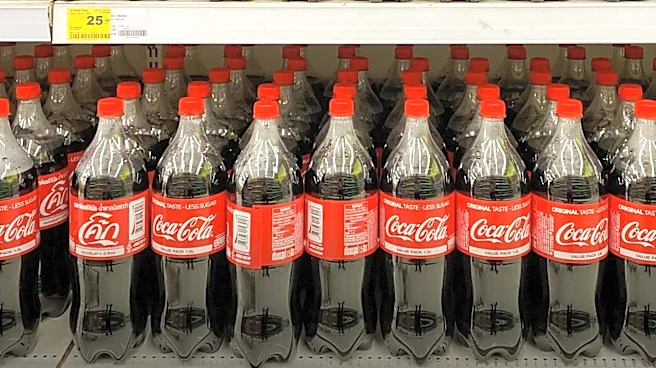
Coca-Cola Brazil, the company's fourth-largest market globally, has unveiled a significant investment plan totaling R$30 billion (approximately $5.5 billion USD) through 2030. This strategic investment aims to expand the company's operations, including
the construction of new factories and the enhancement of existing production capacity. According to Luciana Batista, President of Coca-Cola Brazil, the country is a key growth driver for the multinational, consistently ranking among the top three in growth for the company over the past three years. The investment will be distributed across various segments of Coca-Cola's supply chain, encompassing production, additional lines, distribution centers, truck fleets, point-of-sale equipment, and commercial and sustainability initiatives. The company also plans to introduce new products in 2026, including a new Fanta flavor, and is focusing on expanding its portfolio to include low-sugar options, functional beverages, and ready-to-drink alcoholic beverages, positioning itself as a 'total beverage company.'
Why It's Important?
This substantial investment by Coca-Cola in Brazil underscores the growing importance of emerging markets for global corporations and reflects a broader strategy to diversify product offerings in response to evolving consumer preferences. The focus on low-sugar and functional beverages aligns with global health trends and consumer demand for healthier options, which could influence product development and marketing strategies in other markets, including the U.S. The expansion into ready-to-drink alcoholic beverages, while not the core business, indicates a willingness to explore new categories and consumption occasions, potentially setting a precedent for similar ventures in other regions. Furthermore, the emphasis on sustainability, including projects for waste collection, recycling, and water reduction, highlights a growing corporate commitment to environmental responsibility, which is increasingly scrutinized by consumers and investors worldwide. The success of these initiatives in a major market like Brazil could provide valuable insights and models for Coca-Cola's global operations.
What's Next?
Over the next several years, Coca-Cola Brazil will proceed with the allocation of the R$30 billion investment, which includes identifying specific locations for new factories and implementing upgrades to existing infrastructure. The company is expected to roll out new product innovations, such as the new Fanta flavor in 2026, and continue to expand its portfolio of low-sugar, functional, and ready-to-drink alcoholic beverages. Luciana Batista indicated that the company aims to maintain its growth trajectory, building on decades of consistent performance. The focus on adapting to changing consumer habits, including the demand for more accessible and sustainable products, will likely guide future product development and marketing campaigns. The company will also continue its sustainability efforts, aiming to reduce water consumption in its production processes and expand recycling initiatives. The impact of these investments on Coca-Cola's global revenue and market share will be closely watched, particularly as the company seeks to balance its traditional offerings with new market demands.
Beyond the Headlines
The investment plan by Coca-Cola in Brazil reveals a deeper strategic shift within the beverage industry, moving beyond traditional carbonated soft drinks to embrace a more holistic 'total beverage company' approach. This diversification is a direct response to changing consumer lifestyles, including increased health consciousness and a demand for a wider variety of drink options. The success of Coca-Cola Zero, described as having 'startup-level growth rates,' highlights the significant market potential for low-calorie alternatives. Moreover, the company's entry into ready-to-drink alcoholic beverages, while maintaining its non-alcoholic leadership, signifies a pragmatic adaptation to evolving social consumption patterns. The emphasis on returnable packaging, which offers both environmental benefits and affordability, addresses both sustainability concerns and economic pressures on consumers. This multi-faceted strategy reflects a complex balancing act between preserving brand heritage and innovating to meet contemporary market demands, a challenge faced by many long-established global brands.