
What's Happening?
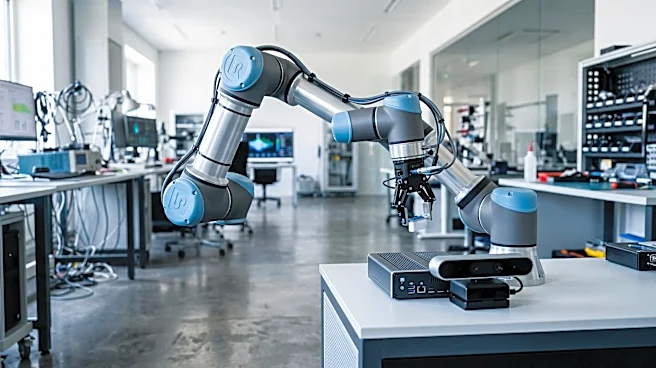
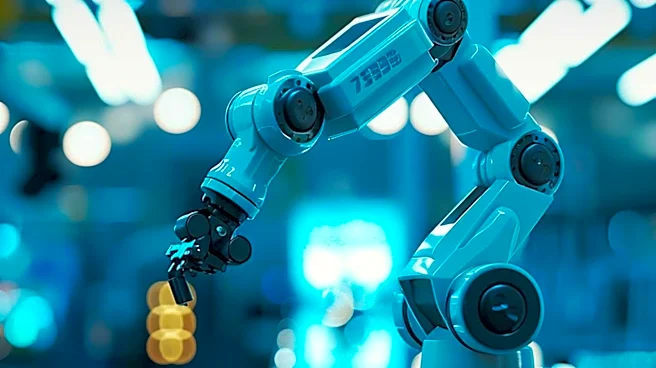
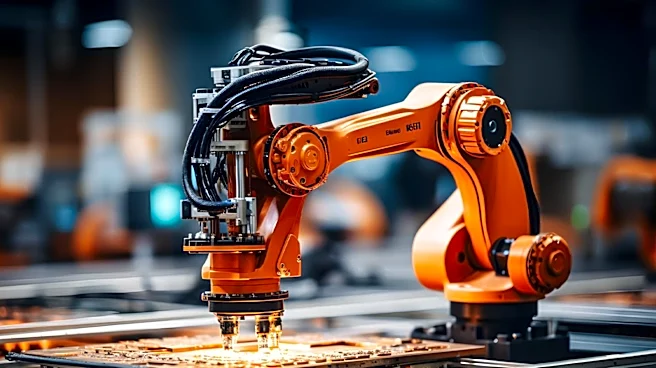
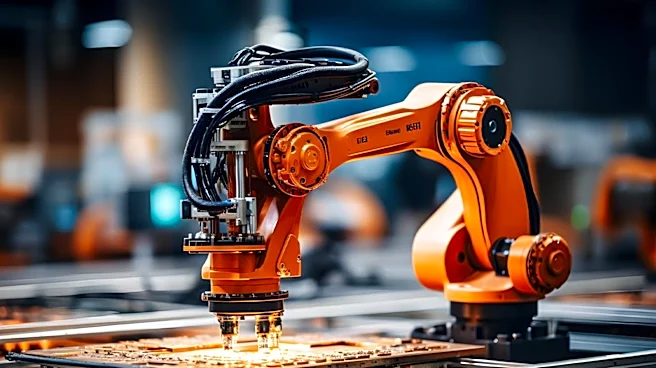
Universal Robots has integrated Inbolt's AI-powered 3D vision guidance directly into its latest generation of collaborative industrial robots, the Gen 7 platform. This integration allows Inbolt Standard software to run natively on the robots' CB7 Core
controller, eliminating the need for a separate industrial computer. The system uses a wrist-mounted 3D camera to identify components based on their CAD files, enabling robots to adapt their programmed trajectories to the actual position of each part during production cycles. This advancement reduces the need for customized jigs and fixtures, simplifying the introduction of new products to manufacturing lines. The Gen 7 platform's integrated Ethernet and power connections also allow the camera to connect directly to the robot's tool flange, streamlining cable management.
Why It's Important?
This technological integration is significant for U.S. manufacturing industries, particularly in sectors like automotive, electronics, and data center hardware. By embedding AI-powered 3D vision directly into collaborative robots, manufacturers can automate a wider range of complex tasks with greater precision and flexibility. This can lead to increased efficiency, reduced production costs, and improved quality control. The ability to quickly train the software to recognize new components from CAD files in under 10 minutes, without extensive data collection, significantly lowers the barrier to entry for advanced automation. This innovation supports the ongoing trend of 'Industry 4.0' by making smart manufacturing solutions more accessible and easier to implement across various production environments.
What's Next?
The Inbolt Standard is now listed on the UR+ Marketplace and will be sold and licensed through Universal Robots and its distribution partners, making it readily available to manufacturers. The companies plan to bring more of the Inbolt range to Universal Robots customers in the coming months. This suggests a continued expansion of AI-driven vision capabilities for collaborative robots. The success of this integration could encourage other robotics manufacturers to pursue similar embedded AI solutions, further accelerating the adoption of advanced automation in U.S. factories and potentially leading to a more competitive manufacturing landscape.
Beyond the Headlines
The direct integration of AI vision into robotic systems represents a deeper convergence of artificial intelligence and robotics, moving beyond simple automation to more intelligent and adaptive manufacturing processes. This development has implications for workforce training, as employees may need new skills to program, operate, and maintain these advanced cobots. Furthermore, the emphasis on local processing of production data, with no information leaving the factory, addresses growing concerns about data privacy and cybersecurity in industrial settings. This trend towards 'edge AI' in manufacturing could set new standards for how sensitive production data is handled and secured.