
What's Happening?
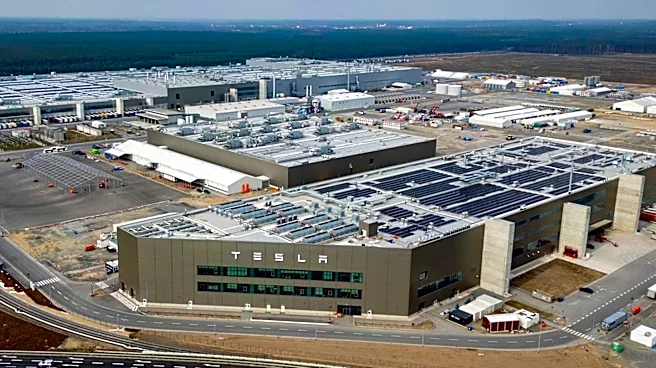
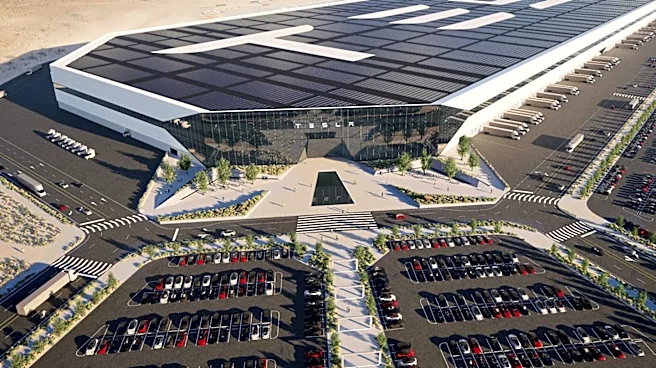
Tesla is considering a substantial investment of approximately $10.1 billion to build a large-scale solar manufacturing facility near Needville, Texas. The proposed facility would focus on manufacturing photovoltaic
solar cells and potentially assembled solar modules. According to a public application submitted through the Texas Comptroller's Jobs, Energy, Technology and Innovation (JETI) program, Tesla anticipates the facility could become commercially operational in the first quarter of 2029. The company projects the creation of 9,712 full-time permanent positions with an estimated annual payroll of about $1.3 billion, in addition to approximately 1,147 temporary construction jobs during peak construction.
Why It's Important?
This potential investment by Tesla signifies a major boost for the U.S. renewable energy manufacturing sector and the Texas economy. A facility of this scale would significantly increase domestic production capacity for solar components, reducing reliance on foreign supply chains and enhancing energy independence. The creation of nearly 10,000 permanent jobs, as highlighted by Rice University economics professor John Diamond, would have a substantial economic impact, extending beyond the facility itself as employees' spending stimulates local businesses. This move aligns with broader national goals to reshore manufacturing and strengthen the clean energy industry, positioning Texas as a key player in the future of solar technology.
What's Next?
Tesla's decision hinges on securing tax incentives from local jurisdictions. The company is requesting an appraised-value limitation for 10 years from Lamar Consolidated Independent School District through the JETI program. Tesla has indicated that property taxes are a significant operating cost for large capital-intensive developments in Texas and that without these incentives, the Fort Bend County location would not be competitive with an alternative site outside Texas. The coming months will likely involve negotiations between Tesla and local authorities to finalize these incentive packages. If approved, the project would move forward with construction, aiming for commercial operations by early 2029, bringing substantial job creation and economic development to the region.
Beyond the Headlines
Tesla's pursuit of tax incentives for this massive solar manufacturing facility underscores the competitive landscape for attracting large-scale industrial investments in the U.S. and globally. Companies often leverage the promise of job creation and economic growth to negotiate favorable tax treatments, creating a dynamic where states and localities compete for these projects. This practice raises questions about the long-term benefits of such incentives versus the immediate tax revenue foregone. Furthermore, the strategic importance of domestic solar manufacturing extends beyond economics, touching on national security and technological leadership. By investing in advanced solar cell and module production, the U.S. aims to control more of the clean energy supply chain, fostering innovation and reducing geopolitical vulnerabilities in critical energy technologies.