








What's Happening?
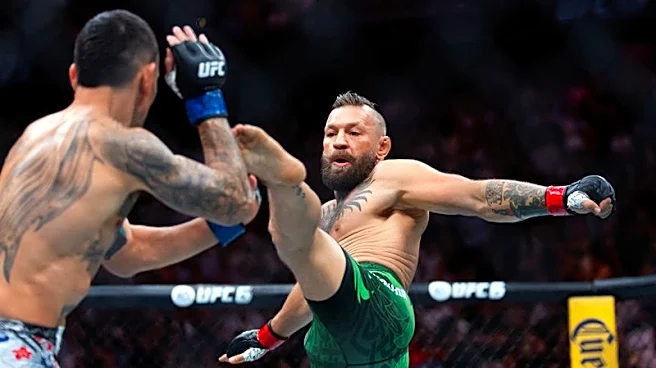
Conor McGregor's coach, John Kavanagh, has publicly stated that the UFC fighter's knee was not an issue before his recent injury at UFC 329. The fight against Max Holloway at T-Mobile Arena ended abruptly after McGregor landed awkwardly on his right knee while
attempting a jump kick, leading to speculation about a pre-existing injury. Kavanagh, in a Facebook post, expressed his devastation over the incident but firmly denied any prior knee problems, emphasizing that the jump kick was a routine part of McGregor's training. McGregor himself addressed the situation on social media, asserting that he was injury-free before the fight and that the injury was unexpected. The fighter is suspected to have suffered a torn ACL, although he did not speak to reporters post-fight.
Why It's Important?
The incident raises significant concerns about athlete safety and the potential for undisclosed injuries in high-stakes sports. McGregor's injury could impact his career trajectory, given his history of knee issues, including a previous ACL tear in 2013. The situation also highlights the pressures on athletes to perform despite potential health risks. For the UFC, this incident underscores the importance of thorough pre-fight medical evaluations to ensure fighter safety. The speculation surrounding McGregor's condition before the fight could lead to increased scrutiny of the UFC's medical protocols and transparency regarding fighter health.
What's Next?
As McGregor recovers, the UFC and his team will likely focus on his rehabilitation and potential return to the octagon. The organization may face calls to review and possibly enhance its medical assessment procedures to prevent similar incidents. Fans and stakeholders will be watching closely to see how McGregor's recovery progresses and whether he can return to his previous form. The incident may also prompt discussions within the sports community about the balance between competitive readiness and athlete health.