



What's Happening?
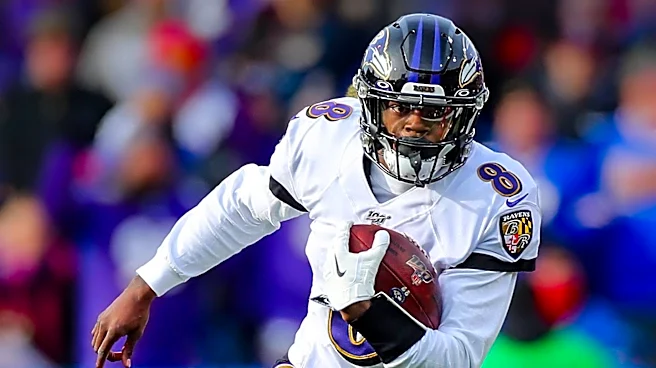
Sports commentator Jason Whitlock voiced strong objections to a defensive pass interference call made against Baltimore Ravens cornerback Nate Wiggins during a game against the Dallas Cowboys. The controversial flag was thrown with 28 seconds left in the fourth
quarter on a Dak Prescott pass to CeeDee Lamb in the end zone. Despite the pass being ruled incomplete, the 20-yard penalty moved the ball to the Ravens’ 22-yard line. Whitlock described the call as "absolutely bogus" and "horrendous," criticizing the referee's judgment. Other former NFL players and analysts, including Darius Butler and Mina Kimes, also expressed similar sentiments, calling it a "terrible call." The Ravens ultimately won the game 34-31 with a last-second field goal, despite the late-game penalty.
Why It's Important?
Jason Whitlock's strong criticism of the defensive pass interference call highlights the ongoing debate and frustration surrounding officiating in professional football. Such calls, especially in critical late-game situations, can significantly alter the outcome of a match, impacting team standings, playoff implications, and even player careers. The controversy surrounding this particular call, echoed by multiple sports figures, underscores the perceived inconsistency and subjective nature of certain penalties in the NFL. This can lead to fan disillusionment and questions about the integrity of the game. For the Ravens, while they ultimately secured the win, the call created unnecessary tension and a challenging situation that could have easily led to a loss, demonstrating the profound impact of officiating decisions.
What's Next?
The NFL will likely review the controversial defensive pass interference call as part of its standard officiating evaluation process, though it is unlikely to change the game's outcome. The public outcry from commentators like Jason Whitlock and former players may put pressure on the league to clarify or refine its rules regarding pass interference, or to improve official training and accountability. Discussions about the consistency of officiating are expected to continue among sports analysts and fans. For the Ravens and Cowboys, they will move on to their next games, but the memory of this contentious call will likely linger, especially if similar situations arise in future matchups.
Beyond the Headlines
Beyond the immediate game result, the controversy surrounding the pass interference call, as highlighted by Jason Whitlock, delves into the broader implications of human error in sports officiating and the role of technology in mitigating such errors. The NFL rulebook defines defensive pass interference, but its application often involves subjective judgment, leading to disputes. This incident reignites conversations about potential technological aids, such as expanded replay reviews or even AI-assisted officiating, to ensure greater accuracy and fairness. The emotional reactions from players, coaches, and commentators underscore how deeply invested stakeholders are in the perceived justice of game outcomes, making consistent and accurate officiating a critical component of the sport's credibility and fan engagement.