



What's Happening?
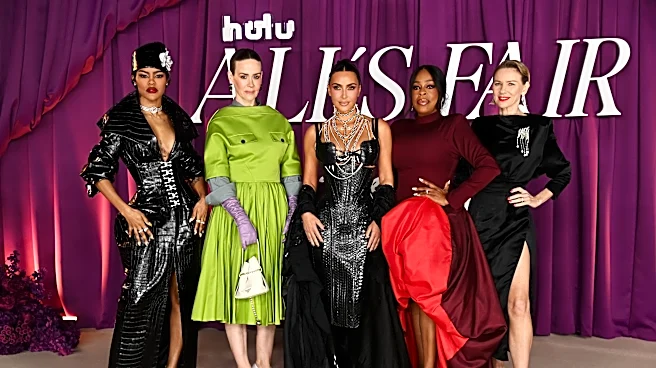
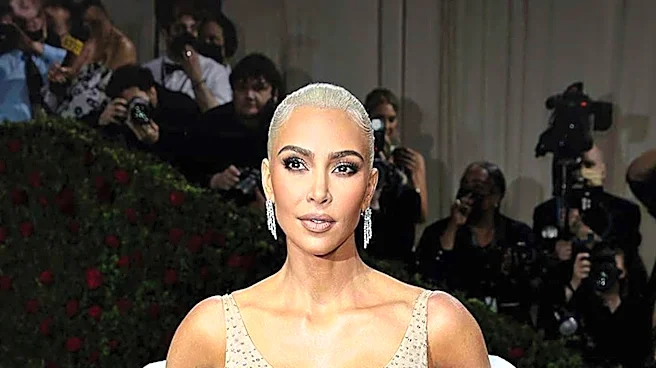
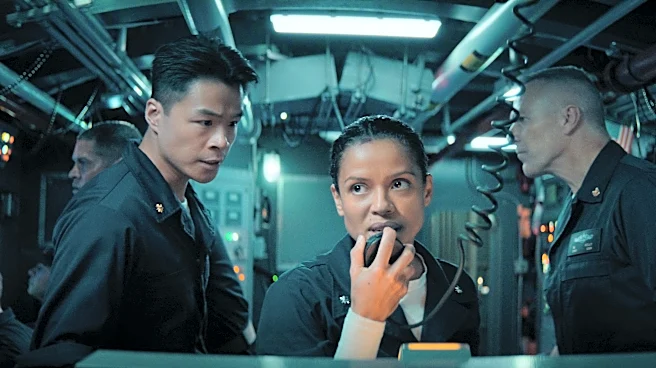
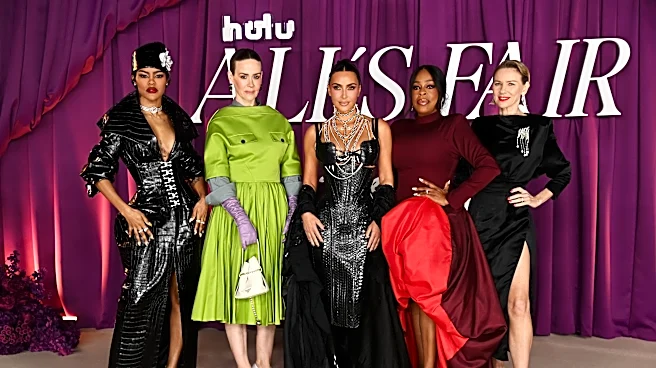
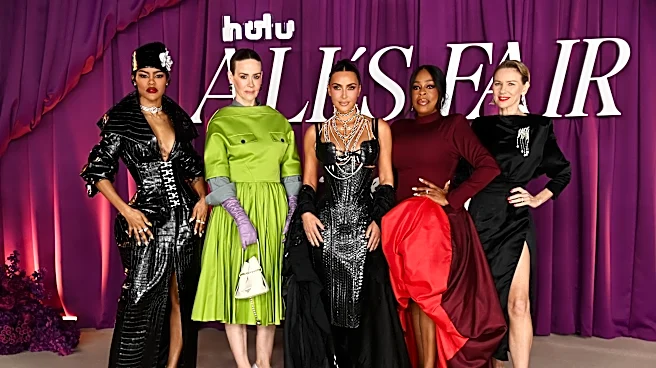
The second season of Ryan Murphy's legal drama 'All's Fair,' starring Kim Kardashian, Naomi Watts, Niecy Nash-Betts, and Glenn Close, has premiered to a critical reception that largely mirrors its first season. While many critics continue to pan the show,
some note a shift towards a 'so bad it's good' quality. The series, which debuted in November 2025, was initially met with savage reviews, leading Kim Kardashian to express fears for her career. However, Kardashian later noted that the negative publicity paradoxically drove viewership, making it a number one show for weeks. The second season continues to feature outlandish plotlines, such as a 'scorpion ball' and a legal case involving invisible ink, with characters delivering often absurd dialogue. Critics like Lucy Mangan of The Guardian, despite awarding one star, admitted to finding enjoyment in the show's preposterousness, suggesting a potential, albeit unintentional, improvement in its entertainment value.
Why It's Important?
The critical reception of 'All's Fair' season two highlights a peculiar trend in contemporary television consumption, where shows initially deemed 'terrible' can garner significant viewership due to their perceived badness. This phenomenon challenges traditional metrics of success in the entertainment industry, suggesting that controversy and negative buzz can sometimes be as effective as critical acclaim in attracting an audience. For Ryan Murphy, a prolific producer known for both critically lauded and polarizing works, this series represents a continuation of his distinctive, often campy, style. The show's performance also reflects on the careers of its high-profile cast members, particularly Kim Kardashian, whose involvement draws considerable media attention regardless of critical consensus. The series' ability to attract viewers despite overwhelmingly negative reviews could influence future production strategies, potentially encouraging more risk-taking or even intentionally provocative content in an effort to capture audience curiosity.
What's Next?
The ongoing critical discussion around 'All's Fair' season two will likely continue to fuel public interest, potentially leading to sustained viewership on Hulu and Disney+. The show's unique position as a series that is both widely panned and widely watched could prompt further analysis within the entertainment industry regarding audience engagement and the impact of critical reviews. Future seasons, if greenlit, might lean further into the 'so bad it's good' aesthetic, or producers might attempt to course-correct based on audience feedback and critical commentary. The performance of 'All's Fair' could also influence casting decisions for similar high-concept, star-studded dramas, particularly regarding the inclusion of reality television personalities in leading roles. The show's trajectory will be closely watched as an example of how a series can defy conventional critical success while still achieving popular traction.
Beyond the Headlines
The 'so bad it's good' phenomenon exemplified by 'All's Fair' touches upon broader cultural dynamics, including the role of irony and meta-commentary in audience engagement. In an era of abundant content, shows that are uniquely terrible can stand out and become conversation pieces, fostering a different kind of communal viewing experience. This trend also raises questions about artistic intent versus audience reception; whether the show's creators are intentionally crafting a campy, self-aware satire, or if its perceived 'badness' is an accidental byproduct that audiences have embraced. Furthermore, the series highlights the power of celebrity in driving viewership, as the star power of its cast, particularly Kim Kardashian, appears to be a significant draw regardless of critical opinion. This suggests a shift in how audiences value entertainment, sometimes prioritizing spectacle and personality over traditional narrative quality or critical approval.