



What's Happening?
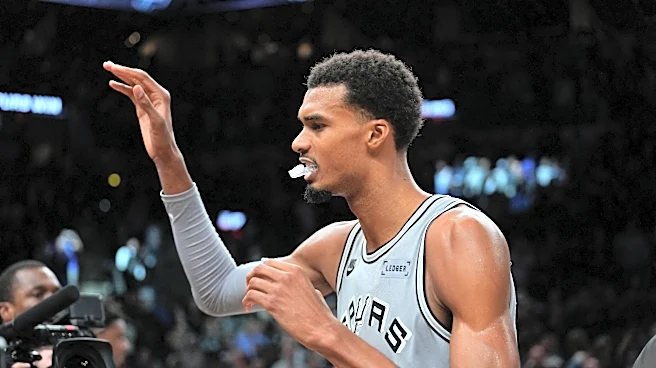
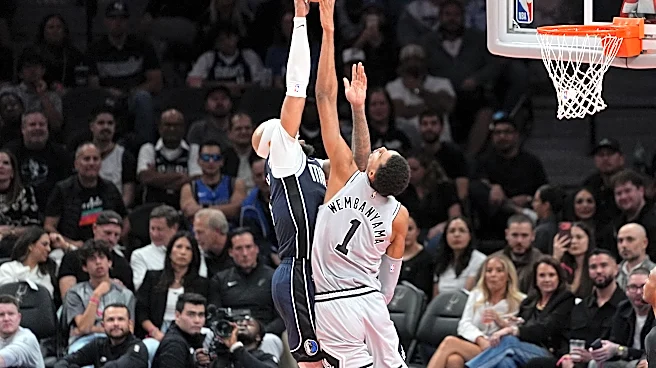
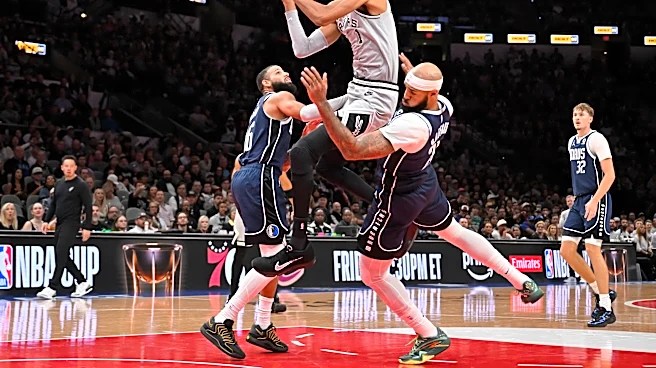
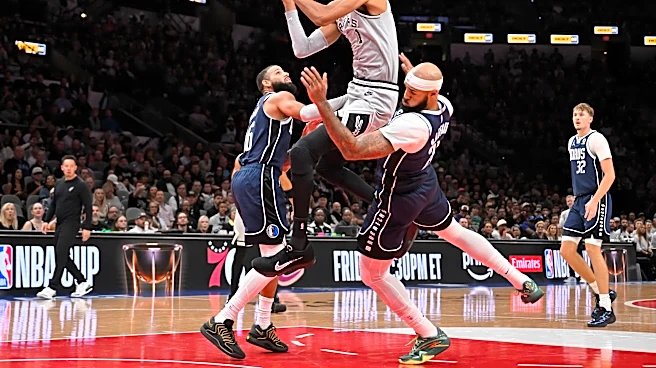
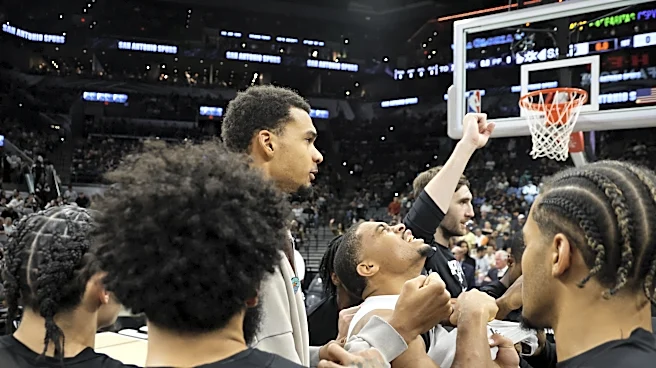
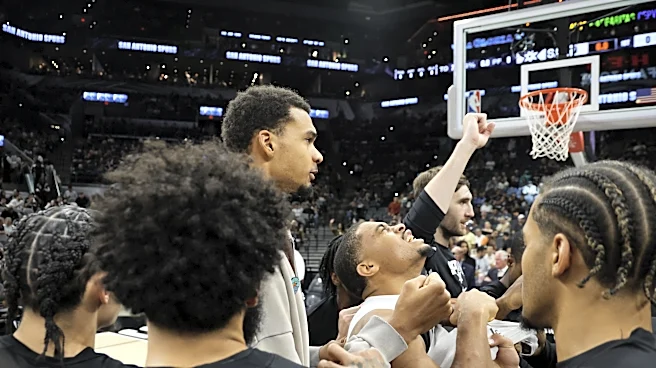
During an appearance on the 'Inside the NBA' show, San Antonio Spurs player Dylan Harper engaged in a candid discussion with Charles Barkley following the Spurs' 112-111 victory over the Dallas Mavericks. Barkley questioned Harper about the strategic
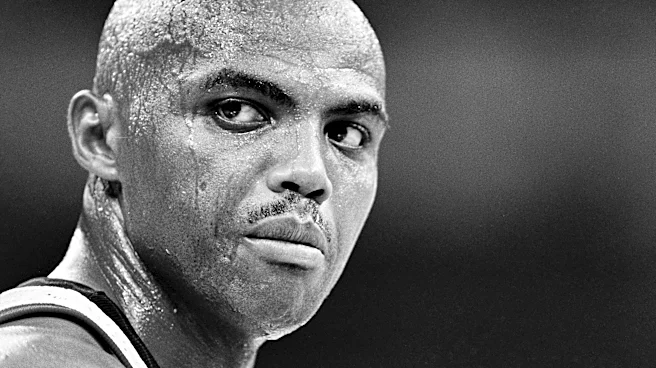
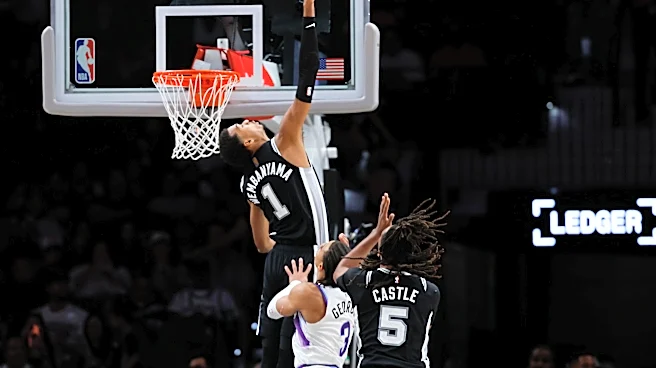
logic behind the Spurs' decision to utilize a three-guard backcourt featuring Harper, Stephon Castle, and De'Aaron Fox. While initially praising Harper and Castle, Barkley bluntly interrupted Harper's explanation of the system, suggesting that it made no sense to him. This interaction marks the second time in recent months that Barkley has publicly questioned the fit of De'Aaron Fox in the Spurs' starting lineup, having previously suggested he should come off the bench. Barkley's comments drew mixed reactions from basketball fans on social media.
Why It's Important?
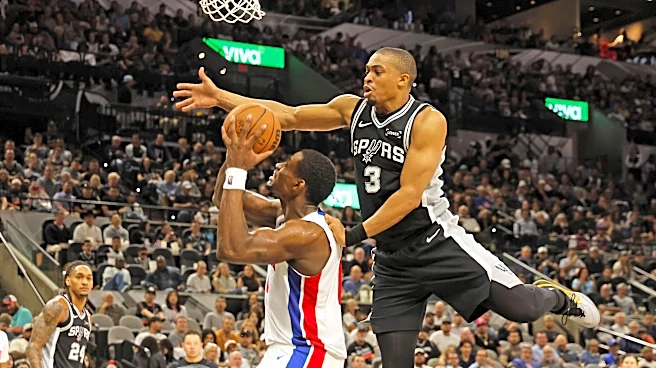
Charles Barkley's critique of the San Antonio Spurs' three-guard backcourt carries significant weight due to his status as an NBA legend and prominent analyst. Such public commentary can influence fan perception, create discussion among sports media, and potentially put pressure on the Spurs' coaching staff regarding their strategic decisions. While the Spurs' backcourt, collectively averaging over 48 points per game and contributing to a 6-2 start, has shown promise, Barkley's remarks highlight potential concerns about player roles and offensive efficiency in a multi-guard system. For Dylan Harper, being directly questioned by a figure like Barkley on national television is a notable experience that tests a young player's composure and ability to articulate team strategy under scrutiny. The ongoing debate about the optimal lineup configuration could impact player development and team chemistry.
What's Next?
It remains to be seen if the San Antonio Spurs organization or coaching staff will publicly respond to Charles Barkley's blunt criticism. The team will likely continue to evaluate the effectiveness of their three-guard system as the season progresses, monitoring the performance of Dylan Harper, Stephon Castle, and De'Aaron Fox. The players themselves will need to maintain focus and continue to develop their on-court chemistry despite external commentary. Barkley's remarks could fuel further discussion among analysts and fans about the Spurs' long-term roster construction and strategic direction. The team's success or struggles in upcoming games may either validate or refute Barkley's assessment of their backcourt configuration.
Beyond the Headlines
Beyond the immediate critique, this exchange highlights the dynamic between sports analysts and active players, particularly young ones. Analysts like Charles Barkley often leverage their experience and platform to offer strong opinions, which can be both insightful and provocative. For young players like Dylan Harper, navigating such public scrutiny is part of their professional development. It underscores the constant pressure and evaluation athletes face, not just from opponents but also from media figures. This situation also touches on the broader discussion within basketball about optimal team composition and the balance between individual talent and collective synergy, especially when integrating multiple ball-dominant guards. The incident serves as a reminder of the intense media spotlight on NBA teams and players.