






What's Happening?
Tower Semiconductor reported strong third-quarter 2026 sales of US$526.16 million and a net income of US$120.26 million, exceeding expectations. The company also provided guidance for fourth-quarter revenue of approximately US$600 million and a full-year
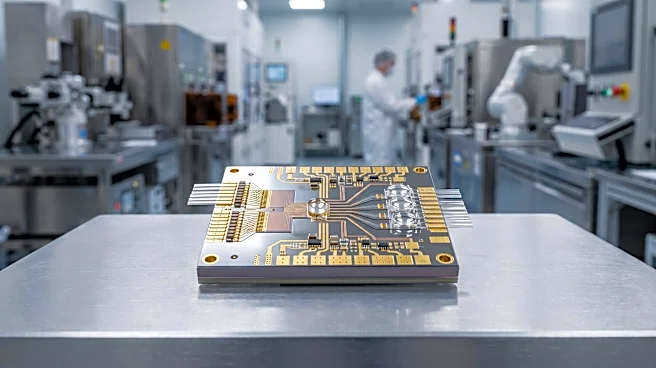
2026 revenue of roughly US$2 billion. This positive performance is significantly influenced by its silicon photonics collaboration with Innolight, particularly the early production of Near Package Optics (NPO) on Tower Semiconductor's PH18M process and multiple 300mm tape-outs. This indicates that AI-driven optical demand is contributing to higher-value manufacturing programs for the company.
Why It's Important?
Tower Semiconductor's robust earnings and optimistic outlook are significant for the U.S. technology sector, particularly in the context of AI infrastructure development. The company's focus on silicon photonics and NPO devices directly supports the growing demand for high-speed data transfer in AI applications, which is crucial for the performance of data centers and AI systems. This success suggests a strong market for specialized semiconductor components that enable advanced AI capabilities. For U.S. businesses and consumers, this could mean faster and more efficient AI technologies. The company's projected revenue growth of 35.9% yearly and a substantial increase in earnings by 2029 highlight the economic impact of AI-driven demand on the semiconductor industry.
What's Next?
Attention will now turn to how Tower Semiconductor's NPO devices transition from early production into scaled, recurring wafer orders. The speed at which multi-channel architectures pull on Tower Semiconductor's capacity will be a key factor. Execution risks related to yield, process control, and the timing of next-generation AI interconnect ramps, especially concerning investments in Japan and U.S. fabs, will be closely watched. The company's ability to meet its projected US$4.6 billion revenue and US$1.6 billion earnings by 2029 will depend on successful expansion and migration efforts, as well as sustained demand for AI and RF technologies.
Beyond the Headlines
The success of Tower Semiconductor in silicon photonics highlights a deeper trend in the semiconductor industry: the increasing specialization and integration of optical technologies with traditional electronics to meet the demands of AI. This shift is not just about faster chips but about fundamental changes in how data is processed and moved within computing systems. The emphasis on 'high-value manufacturing programs' suggests a move towards more complex and specialized components, potentially increasing barriers to entry for new competitors and concentrating expertise among a few key players. This could have long-term implications for technological leadership and national security, as these specialized components become critical infrastructure for advanced AI capabilities.