









What's Happening?
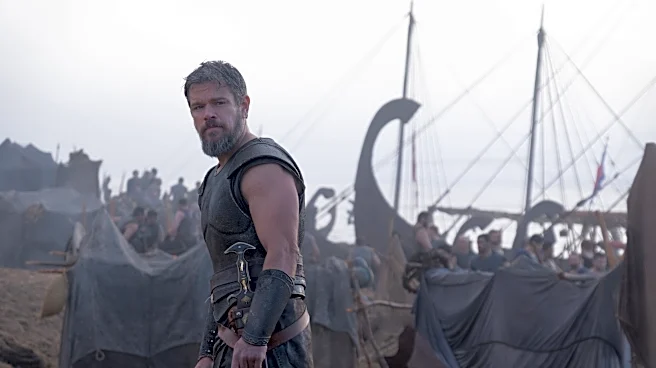
Christopher Nolan's latest film, 'The Odyssey', offers a contemporary interpretation of Homer's classic epic. Starring Matt Damon as Odysseus, the film explores themes of guilt and redemption, set against the backdrop of the Trojan War. Nolan's adaptation
diverges from traditional portrayals by focusing on the psychological complexities of Odysseus, presenting a narrative that intertwines human emotions with mythical elements. The film's 172-minute runtime is characterized by Nolan's signature non-linear storytelling, creating a cinematic experience that is both visually and thematically rich.
Why It's Important?
Nolan's 'The Odyssey' is significant for its innovative approach to a well-known story, blending historical context with modern cinematic techniques. This adaptation not only revitalizes interest in classical literature but also reflects contemporary societal issues, such as the consequences of war and the moral dilemmas faced by leaders. By reimagining Odysseus's journey, Nolan invites audiences to reflect on the timeless nature of human struggles and the enduring impact of personal and collective actions. The film's release is likely to spark discussions on the intersection of art, history, and modernity.