




What's Happening?
Cyclists are being advised to incorporate specific strength training exercises into their winter routines, which can be performed at home with minimal equipment. These exercises aim to develop strength, stabilize posture on the bike, and prevent chronic
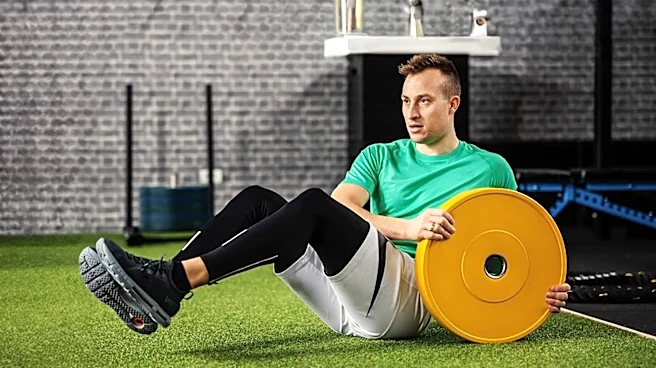
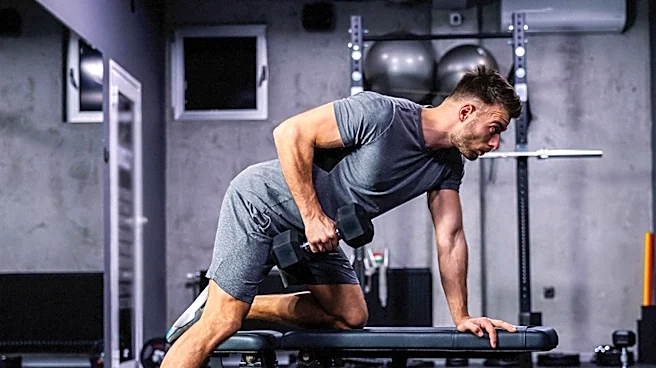
pain. The recommended routine includes six key exercises: Bulgarian Split Squats for unilateral strength and stability, Single-Leg Deadlifts for hamstrings and the posterior chain, Single-Leg Glute Bridges for glutes and pelvic stability, Dynamic Planks for axial stability and force transfer, Lateral Lunges for frontal plane strengthening and pelvic stability, and Slow Push-ups with Pause for upper body support. The program emphasizes quality of execution over speed, with two sessions per week lasting 35 to 45 minutes, allowing 1 minute 30 seconds of recovery between sets.
Why It's Important?
This home-based strength training program is crucial for U.S. cyclists, from amateurs to professionals, as it offers an accessible way to improve performance and reduce injury risk without requiring a gym membership. By focusing on unilateral strength, core stability, and specific muscle groups vital for pedaling, cyclists can enhance their power output, maintain an efficient position on the bike, and prevent common issues like lower back fatigue. The emphasis on minimal equipment makes it a cost-effective and convenient solution, particularly during colder months or for those with busy schedules. This approach promotes a holistic view of athletic training, recognizing that off-bike conditioning is as important as time spent cycling for overall health and competitive advantage.
What's Next?
Cyclists are encouraged to integrate these exercises into their weekly training schedule, ideally two times a week, complementing their cycling or indoor trainer workouts. The progression involves starting with two sets and gradually increasing volume or difficulty, initially without weight and then adding adjustable auxiliary weights like a loaded backpack. The long-term benefits include improved stability during accelerations, reduced lower back fatigue, and a stronger pushing sensation on the pedals. This trend may lead to more cycling coaches and fitness experts recommending similar home-based strength programs, potentially influencing the design of future training plans and the development of specialized home fitness equipment tailored for cyclists.
Beyond the Headlines
The promotion of home-based strength training for cyclists highlights a broader shift towards personalized and accessible fitness solutions. This approach not only democratizes strength training for athletes who may not have access to specialized gyms but also underscores the importance of functional fitness tailored to specific sports. It challenges the traditional notion that extensive gym equipment is necessary for effective strength conditioning. Furthermore, by empowering individuals to take control of their training at home, it fosters greater self-efficacy and understanding of their bodies. This could also lead to a greater appreciation for injury prevention and long-term athletic health, moving beyond a sole focus on performance metrics during rides.