




What's Happening?
Applied Intuition is partnering with Nissan to advance the development of AI-defined vehicles. This collaboration aims to transform how vehicles are built by focusing on foundational development software and processes. The automotive industry is shifting
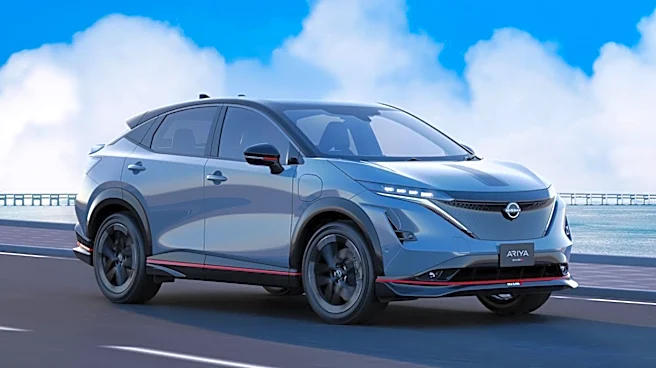
towards AI-defined vehicles, necessitating a change in not only the software running on these vehicles but also the methods used to build, test, and continuously update that software. Applied Intuition's Vehicle OS software is being utilized to bring AI-powered speed and intelligence to Nissan's engineering workflows, supporting vehicle software development and establishing a scalable software platform on their core ECUs. This partnership, which began in 2020 with tooling, recently showcased a demonstration at AWS Summit Japan where a software update, typically requiring months, was implemented, tested, and deployed in real-time to a Nissan LEAF-based test vehicle. This highlights a significantly faster approach to vehicle software development, compressing a months-long workflow into minutes.
Why It's Important?
This collaboration is crucial for the U.S. automotive industry as it signifies a major step towards integrating advanced AI into vehicle development, potentially setting new industry standards for efficiency and innovation. The ability to rapidly develop, validate, and deploy software is becoming a key competitive advantage in a global market increasingly crowded with software-native entrants. By streamlining development cycles and enabling continuous software updates, this partnership could lead to more sophisticated and adaptable vehicles, enhancing consumer experience and safety. For U.S. consumers, this could mean faster access to cutting-edge automotive technology and more personalized vehicle features. For U.S. businesses in the automotive sector, it underscores the growing importance of AI and software development expertise, potentially driving investment in these areas and fostering new job opportunities in tech-automotive integration. The shift towards AI-defined vehicles also impacts the supply chain, as OEMs will increasingly rely on partners capable of delivering advanced software solutions.
What's Next?
The partnership between Applied Intuition and Nissan is expected to continue focusing on building a common software platform that spans various vehicle models, leveraging AI-powered tooling for faster development and continuous feature evolution. This will enable product teams to fully utilize the flexibility offered by the new approach. Applied Intuition's agentic platform for physical AI, Dana, will further integrate into automakers' development lifecycles, automating complex workflows, accelerating validation, and significantly increasing development productivity. This ongoing effort aims to free engineering teams from disconnected tools and manual processes, allowing them to create differentiated software experiences that will define the next generation of mobility. The success of this model could influence other major automotive manufacturers to adopt similar AI-driven development strategies, further accelerating the industry's transformation.
Beyond the Headlines
The deeper implications of this shift extend beyond mere technological advancement; they touch upon the very nature of automotive engineering and consumer expectations. The move towards AI-defined vehicles suggests a future where vehicles are not static products but continuously evolving platforms, much like smartphones. This could lead to new business models centered around software subscriptions and over-the-air updates, fundamentally altering how consumers interact with and purchase vehicles. Ethical considerations regarding AI decision-making in autonomous systems, data privacy, and cybersecurity will become increasingly prominent. Furthermore, the demand for highly specialized software engineers and AI experts in the automotive sector will likely surge, creating a talent gap that the U.S. education system and workforce development programs will need to address. This transformation also raises questions about the long-term viability of traditional automotive manufacturing processes and the potential for new entrants to disrupt the market with software-first approaches.