


What's Happening?
Billy Jurges, a former shortstop for the Chicago Cubs, is being remembered for his exceptional defensive skills and a career marked by unusual events. Jurges played for the Cubs from 1932-1938, contributing to three National League pennant-winning teams
and earning an All-Star selection in 1937. Despite being an average hitter, his primary value was his defense, leading all of MLB in defensive bWAR in 1932 and 1935. A notable incident in his career occurred in 1932 when he was shot by a scorned showgirl, Violet Popovich Valli, an event that some believe inspired 'The Natural.' Jurges recovered quickly, missing only three weeks. Later in his career, a beaning incident in 1940 contributed to discussions that eventually led to the compulsory use of batting helmets in baseball. After his playing career, Jurges managed the Red Sox briefly and served as a scout for several teams.
Why It's Important?
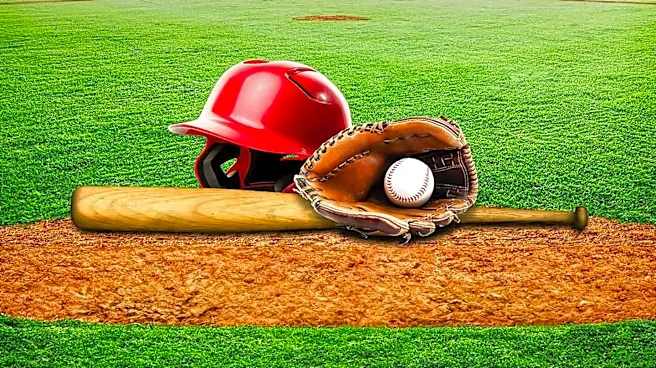
Billy Jurges' career is important for several reasons, particularly in the context of baseball history and player safety. His defensive prowess highlights the value of specialized skills in baseball, demonstrating that not all players need to be offensive powerhouses to be impactful. The shooting incident, while sensational, underscores the personal lives of athletes and the public scrutiny they face. More significantly, his beaning in 1940 played a role in the eventual adoption of batting helmets, a critical safety measure that has protected countless players since. This aspect of his story illustrates how individual player experiences can drive significant rule changes and advancements in player welfare within professional sports. His post-playing career as a manager and scout also reflects the common trajectory of many former athletes who remain involved in the sport.
What's Next?
While Billy Jurges' playing career concluded decades ago, his story continues to be revisited in historical sports analyses and retrospectives, such as the 'Top 100 Cubs of all time' series. These ongoing discussions ensure that his contributions to baseball, particularly his defensive excellence and his indirect role in player safety advancements, remain recognized. Future sports historians and analysts may continue to cite his experiences when discussing the evolution of baseball rules and player protection. His story also serves as a point of interest for fans of baseball lore, particularly those interested in the more dramatic and unusual events that have shaped the sport's past. The legacy of players like Jurges helps to enrich the narrative of baseball's long and storied history.
Beyond the Headlines
Beyond the statistics and dramatic incidents, Billy Jurges' career offers a glimpse into the evolving culture of professional baseball in the early to mid-20th century. The shooting incident, while tragic, reflects a period when the private lives of athletes were often intertwined with public spectacle, sometimes with dangerous consequences. His beaning and the subsequent discussions about headgear highlight a gradual shift in sports towards prioritizing player safety, a concept that was not always at the forefront of professional athletics. This evolution from resistance to acceptance of protective gear underscores broader societal changes in understanding athlete well-being. Jurges' story, therefore, is not just about a baseball player, but also about the changing dynamics between athletes, the public, and the institutions governing professional sports.