


What's Happening?
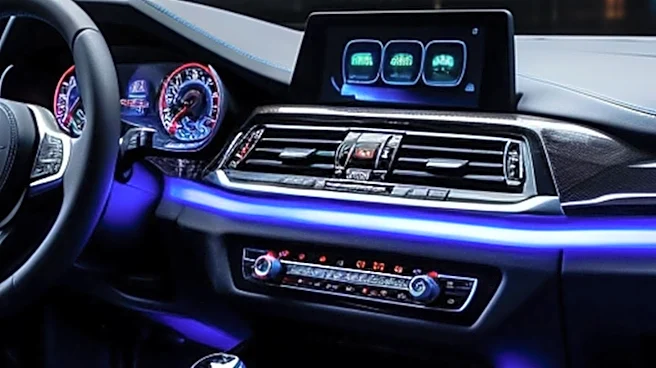
Floating-screen car receivers are gaining prominence in the automotive aftermarket, providing a larger display for in-car entertainment and navigation. These units, such as the Kenwood Excelon Reference DMX1057XR and DMX1058XR, feature 9- to 11-inch HD
screens that are positioned in front of the dashboard on a compact chassis. This design allows for the installation of a large display even in vehicles with smaller radio openings, as detailed by Audio MotorSports. Many of these floating-screen receivers come equipped with wireless CarPlay and Android Auto capabilities, offering seamless smartphone integration. Brands like Stinger, Kenwood, Pioneer, JVC, and Sony are among the manufacturers offering these advanced car stereo solutions, which often include features like 5V preamps and HD Radio.
Why It's Important?
The introduction of floating-screen car receivers significantly enhances the in-car experience for U.S. consumers, bringing advanced technology and convenience to a wider range of vehicles. This development is particularly important for the automotive aftermarket industry, as it creates new opportunities for sales and installation services. Consumers benefit from improved navigation, easier access to entertainment, and safer interaction with their smartphones while driving, thanks to features like wireless CarPlay and Android Auto. The ability to install larger screens in older or more compact car models democratizes access to premium infotainment features, potentially extending the lifespan and appeal of existing vehicles. This trend also underscores the increasing demand for integrated digital experiences within the automotive sector.
What's Next?
The market for floating-screen car receivers is expected to continue its growth, with manufacturers likely to introduce even larger and more feature-rich displays. Future iterations may include enhanced voice control, more sophisticated integration with vehicle diagnostics, and personalized user interfaces. The competition among brands like Kenwood, Pioneer, and Sony will likely drive innovation and potentially lead to more affordable options for consumers. Installation services for these advanced systems will also see increased demand, requiring technicians to stay updated on the latest technologies. As vehicle technology evolves, these aftermarket solutions will play a crucial role in bridging the gap between older car models and the latest in-car infotainment systems.
Beyond the Headlines
The proliferation of floating-screen car receivers reflects a broader societal expectation for seamless digital integration across all aspects of life, including transportation. This trend highlights the increasing importance of user experience and connectivity in product design. Beyond mere entertainment, these systems contribute to driver safety by minimizing distractions through intuitive interfaces and voice commands. However, it also raises questions about potential information overload and the need for robust cybersecurity measures to protect personal data accessed through these connected devices. The evolution of these systems could also influence future vehicle interior designs, pushing manufacturers to consider more flexible and upgradeable infotainment architectures.