



What's Happening?
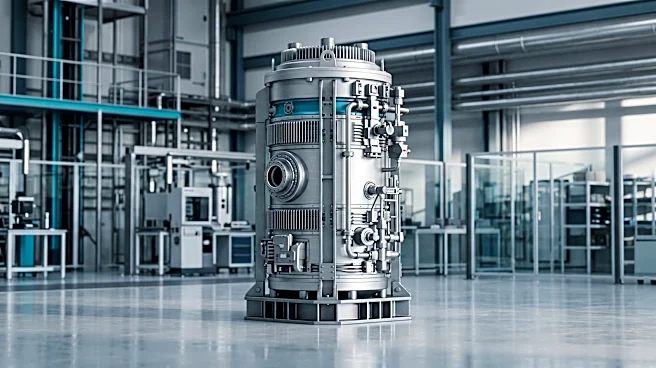
DL E&C has achieved a significant milestone by becoming the first domestic firm to standardize the design of Small Modular Reactors (SMRs). This development positions the company at the forefront of advanced nuclear technology within its home market.
SMRs represent a new generation of nuclear power technology, characterized by their smaller size, modular construction, and enhanced safety features compared to traditional large-scale nuclear power plants. The standardization of their design is crucial for streamlining manufacturing, reducing construction costs, and accelerating deployment. This move by DL E&C indicates a strategic focus on emerging energy solutions and a commitment to advancing nuclear energy capabilities. The company's efforts in this area could pave the way for broader adoption of SMR technology, offering a more flexible and scalable approach to nuclear power generation.
Why It's Important?
The standardization of SMR design by DL E&C holds significant implications for the energy sector, particularly in the context of global energy transitions and the increasing demand for clean energy sources. Standardized designs can lead to mass production, which in turn can drive down costs and shorten construction timelines, making nuclear power more competitive with other energy sources. This development could enhance energy security by providing a reliable, carbon-free power option that can be deployed in various locations, including those with smaller grids or limited space. For the U.S., advancements in SMR technology by international firms like DL E&C can spur innovation and competition, potentially influencing domestic SMR development and deployment strategies. It also highlights the growing international interest and investment in advanced nuclear technologies as a key component of future energy portfolios.
What's Next?
Following the standardization of its SMR design, DL E&C is likely to focus on securing regulatory approvals and commercializing its SMR technology. This will involve rigorous testing, licensing processes, and potentially forming partnerships for deployment. The company may also explore opportunities for international collaboration and export of its SMR technology, given the global interest in advanced nuclear solutions. Other domestic and international firms in the nuclear energy sector will likely observe DL E&C's progress closely, potentially accelerating their own SMR development efforts to remain competitive. This could lead to a more rapid evolution of the SMR market, with increased investment and innovation in the coming years as companies vie for market share in this promising energy segment.
Beyond the Headlines
The standardization of SMR design by DL E&C represents a broader shift in the nuclear energy paradigm, moving away from large, bespoke power plants towards more flexible, factory-built units. This shift has profound implications for energy infrastructure, potentially enabling decentralized power generation and enhancing grid resilience. Ethically, SMRs are often touted for their enhanced safety features and reduced waste production compared to conventional reactors, addressing some long-standing concerns about nuclear power. Legally, the standardization process could simplify regulatory frameworks, making it easier to license and deploy these reactors across different jurisdictions. Culturally, the success of SMRs could help reshape public perception of nuclear energy, fostering greater acceptance as a viable and sustainable power source in the fight against climate change.