


What's Happening?
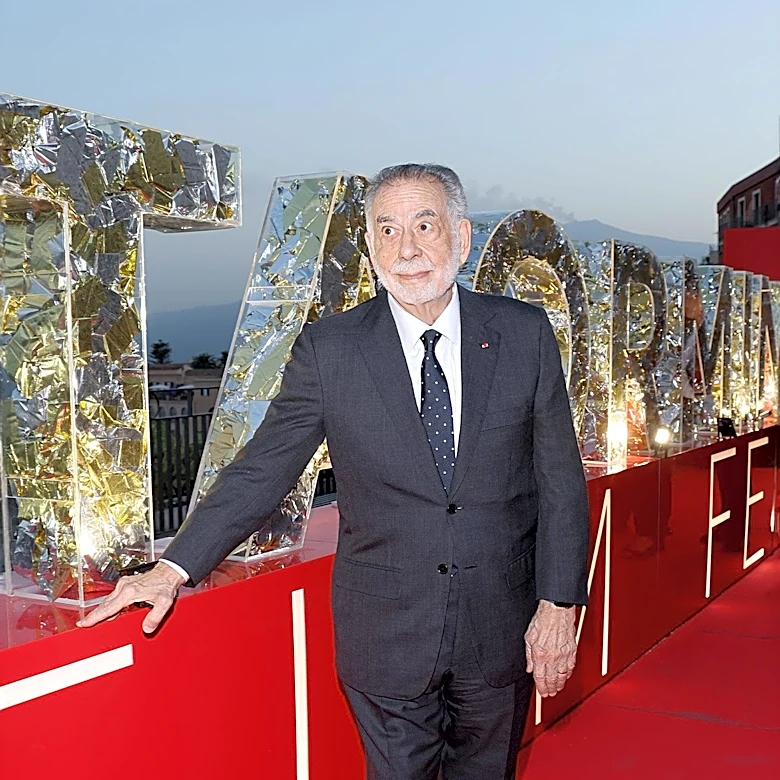
Acclaimed filmmaker Andrey Zvyagintsev has released his new film, 'Minotaur,' a French-German-Latvian co-production, which premiered at the Cannes Film Festival and is France's submission for the Oscar for international feature. This marks Zvyagintsev's
first film in nine years, following a severe health crisis in 2021 where he contracted COVID-19, leading to a medically induced coma for 40 days and a year-long rehabilitation. During his recovery, he and his family moved to France, having decided not to return to Russia. 'Minotaur' is a contemporary adaptation of Claude Chabrol's 1969 thriller 'The Unfaithful Wife,' set in a fictional provincial Russian town in 2022. It intertwines a businessman's discovery of his wife's affair with his obligation to submit employees for conscription into the 'special military operation' in Ukraine, creating a narrative that explores power, corruption, and personal anxiety against a backdrop of ongoing conflict.
Why It's Important?
Andrey Zvyagintsev's return to filmmaking with 'Minotaur' is significant not only for his personal triumph over severe illness but also for its bold political commentary. His previous films, 'Leviathan' and 'Loveless,' were critical of modern Russia and nominated for Oscars. 'Minotaur' continues this tradition, directly addressing the war in Ukraine and the political climate within Russia, which is particularly impactful given Zvyagintsev's decision to leave his homeland. The film's ability to weave personal drama with broader geopolitical issues offers a unique perspective on the human condition amidst conflict and authoritarianism. For international cinema, it represents a powerful voice from a director who has consistently challenged narratives and explored complex societal themes, potentially influencing global discourse on art, politics, and human rights.
What's Next?
As 'Minotaur' is France's submission for the Oscar for international feature, it will undergo the rigorous selection process for the Academy Awards, potentially bringing further international recognition to Zvyagintsev and his work. The film's release will likely spark discussions about its political themes and its portrayal of contemporary Russia, especially given Zvyagintsev's outspoken criticism of the Russian government. His current status as a Russian filmmaker working outside the country grants him more creative freedom, suggesting that future projects may continue to explore sensitive political and social issues without the constraints of censorship he would face in Russia. Zvyagintsev has also expressed a desire to make a film called 'Jupiter' about an oligarch, indicating his continued ambition for ambitious storytelling.
Beyond the Headlines
Zvyagintsev's journey from a life-threatening illness and forced displacement to creating a critically acclaimed film highlights the resilience of artistic expression in the face of adversity. His decision to infuse 'Minotaur' with overt political commentary, despite the personal risks, underscores the role of art as a form of resistance and a mirror to societal truths. The film's exploration of power dynamics, both within a marriage and within a state, suggests deeper ethical and psychological implications about how individuals navigate corruption and control. The title 'Minotaur' itself, referencing both the Greek myth and Balzac's 'The Physiology of Marriage,' points to the labyrinthine nature of human relationships and political systems, where individuals can feel trapped and compelled to commit unthinkable acts. This film is not just a story but a testament to the enduring power of cinema to provoke thought and challenge the status quo.