




What's Happening?
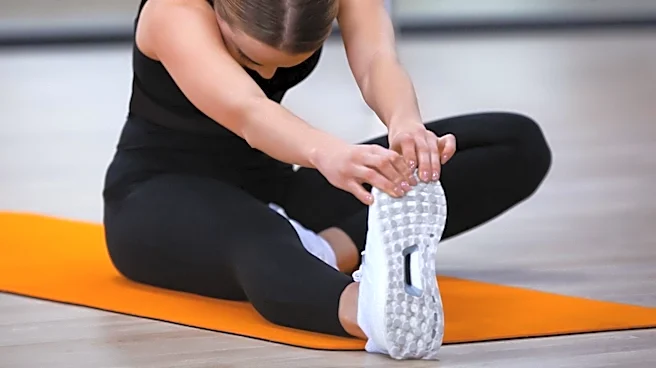
A comprehensive meta-analysis published in Sports Medicine – Open, led by Kensuke Oba of Waseda University, has investigated the effectiveness of chronic static stretching on lower-limb flexibility in healthy individuals. The study, which systematically
reviewed 79 randomized controlled trials involving 3,287 participants, confirms that static stretching produces a moderate and statistically robust improvement in flexibility. However, the research also delves into whether factors such as age, sex, fitness level, and the specific muscle group being stretched influence the extent of these flexibility gains. The findings indicate that while stretching generally works, its efficacy can vary significantly among different individuals and muscle groups. This meta-analysis aimed to provide a more nuanced understanding of who benefits most from static stretching, moving beyond a one-size-fits-all approach.
Why It's Important?
This meta-analysis is important for the U.S. health and fitness industries, as it provides evidence-based insights into flexibility training. For clinicians, coaches, and fitness influencers, the study offers a clearer understanding of how to tailor stretching programs for diverse populations. Recognizing that flexibility gains are not uniform across all demographics can lead to more personalized and effective exercise prescriptions, potentially improving outcomes for individuals seeking to enhance their range of motion, prevent injuries, and improve daily function. The findings challenge the assumption that all individuals benefit equally from static stretching, prompting a shift towards more individualized approaches in physical therapy and fitness regimens. This could lead to the development of more targeted stretching protocols, optimizing time and effort for those engaging in flexibility exercises.
What's Next?
The findings of this meta-analysis are expected to influence the design of future stretching research. The authors suggest that subsequent studies should be adequately powered to test interactions, specifically designed to detect how different age groups, sexes, or muscle groups respond to stretching. This will encourage researchers to recruit a wider range of participants and standardize the reporting of baseline flexibility and muscle-specific outcomes. For the public, the practical takeaway is a reassurance that chronic static stretching is an effective tool for improving lower-limb flexibility, but also a reminder that individual responses vary. This understanding will likely lead to more informed discussions between individuals and their healthcare or fitness professionals about personalized stretching routines.
Beyond the Headlines
The study's emphasis on individual variability in response to static stretching highlights a broader trend in exercise science: the move away from generalized recommendations towards personalized approaches. This shift has ethical implications, as it underscores the importance of recognizing individual differences in health and fitness interventions. Culturally, the prevalence of 'new stretching challenges' on social media often promotes a universal benefit, which this research subtly refutes by demonstrating that not everyone gains flexibility equally. This meta-analysis encourages a more critical and evidence-based perspective on fitness trends, promoting a deeper understanding of the physiological complexities involved in improving flexibility. It also suggests a long-term shift towards more sophisticated and data-driven exercise prescriptions that consider individual characteristics.