








What's Happening?
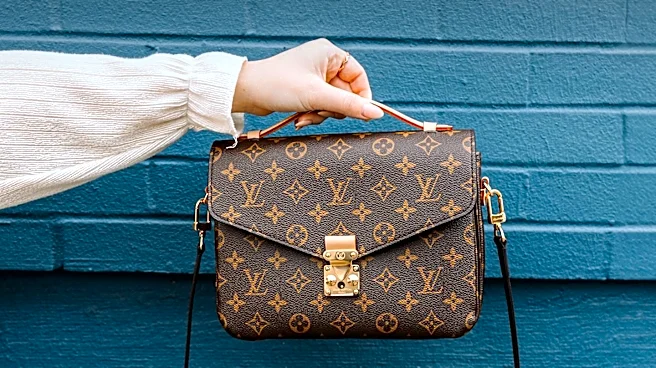
Louis Vuitton has won a legal battle against the Chinese drinks chain Molly Tea over a logo dispute. The court in Jiangsu province ruled that Molly Tea had infringed on seven registered Louis Vuitton trademarks by using a design similar to the luxury
brand's iconic four-petal monogram. As a result, Molly Tea has been ordered to pay $1.5 million in damages and issue a corrective statement on social media. The decision has sparked significant debate online, with many defending Molly Tea and arguing that the monogram's design has historical origins predating Louis Vuitton's use. Critics have pointed out that similar patterns appeared in ancient Chinese textiles, suggesting cultural appropriation by the fashion brand.
Why It's Important?
This case highlights the ongoing tensions between global brands and local businesses over intellectual property rights. For Louis Vuitton, protecting its brand identity is crucial in maintaining its luxury status and market position. However, the backlash against the ruling underscores the complexities of cultural heritage and intellectual property in a globalized economy. The decision may impact how international brands enforce trademark rights in regions with rich cultural histories, potentially leading to more nuanced approaches in future disputes. The case also raises questions about the balance between protecting brand identities and respecting cultural heritage, which could influence future legal frameworks and business strategies.
What's Next?
Following the court's decision, Molly Tea is expected to comply with the ruling by paying the damages and issuing the required statement. However, the broader implications of this case may prompt discussions among international brands about their trademark strategies, especially in markets with deep cultural histories. Legal experts and businesses may explore ways to navigate these complexities, potentially leading to changes in how trademarks are registered and enforced globally. Additionally, the public reaction may influence how brands approach cultural sensitivity in their marketing and branding efforts.
Beyond the Headlines
The case between Louis Vuitton and Molly Tea highlights the broader issue of cultural appropriation in the fashion industry. As global brands expand into diverse markets, they may face increased scrutiny over their use of cultural symbols and designs. This could lead to a reevaluation of how brands engage with cultural heritage, potentially fostering more collaborative and respectful approaches. The case also underscores the importance of understanding cultural contexts in international business, which could drive changes in how companies train their teams and develop their global strategies.