





What's Happening?
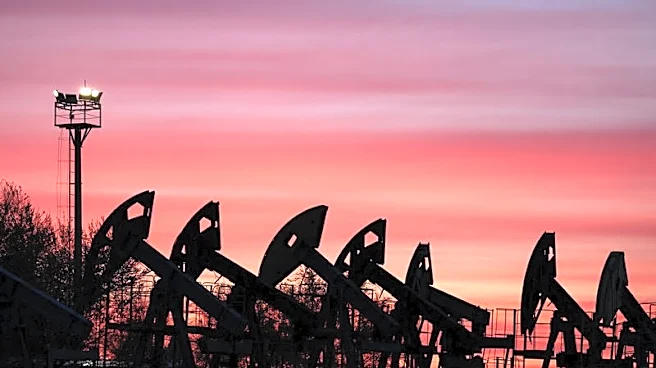
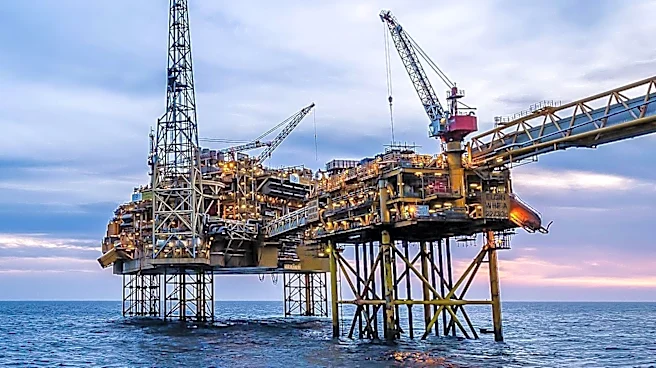
The oil market is experiencing a shift from concerns over supply shortages to an anticipation of surplus, as oil production in the Gulf region recovers faster than expected. Rystad Energy reports that approximately 2 million barrels per day of oil production have
been restored in the Gulf over the past three weeks. This recovery has led to a decrease in Brent crude oil prices, which are now trading around $73 a barrel, a return to pre-conflict levels. The International Energy Agency forecasts a supply overhang, with global supply expected to increase by 8 million barrels per day while demand rises by only 2 million. This has prompted financial institutions like Goldman Sachs and Morgan Stanley to lower their oil price forecasts for the coming years.
Why It's Important?
The rapid recovery in oil production and the resulting surplus outlook have significant implications for global energy markets and economic stakeholders. Lower oil prices can reduce costs for industries reliant on oil, potentially leading to lower consumer prices and increased economic activity. However, oil-producing countries may face reduced revenues, impacting their economies. The shift in market dynamics also affects investment strategies, as financial institutions adjust their forecasts and investment portfolios in response to the changing supply-demand balance. Additionally, the geopolitical landscape may be influenced by the reduced dependency on oil from conflict-prone regions.
What's Next?
As the oil market adjusts to the new supply dynamics, stakeholders will be closely monitoring geopolitical developments, particularly in the Strait of Hormuz, a critical chokepoint for global oil trade. Any disruptions in tanker traffic could impact the recovery and lead to fluctuations in oil prices. Additionally, the market will watch for changes in demand, especially from major consumers like China and Europe, which could further influence price trends. Oil producers may need to adjust their production strategies to align with the evolving market conditions and maintain economic stability.