





What's Happening?
U.S. chipmaker Intel announced a $5.7 billion investment to expand its manufacturing capabilities at its Leixlip campus in Ireland. This move is part of Intel's strategy to address the global chip shortage, which has been exacerbated by the increasing
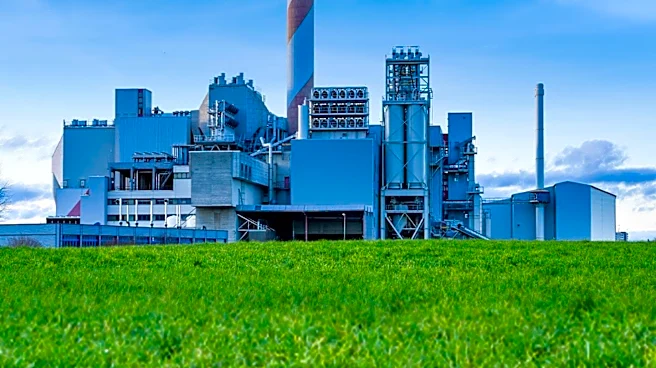
demand for AI infrastructure. The investment will focus on upgrading existing fabrication facilities, installing the latest manufacturing equipment, and making infrastructure enhancements. Specifically, Intel aims to scale up the manufacturing of its data center chips, including the Intel Xeon 6 and next-generation Intel Xeon processors. The company also plans to boost overall output, increase research and development activities, and hire more highly skilled workers at the facility, which has been operational since 1989 and currently employs 4,900 people. Key infrastructure enhancements include expanding the automated track system to integrate disparate campus modules into a single, high-velocity production environment.
Why It's Important?
Intel's substantial investment in its Irish manufacturing facility is crucial for several reasons, particularly in the context of the U.S. and global technology landscape. By expanding its production of data center chips, Intel is directly responding to the surging demand driven by artificial intelligence and cloud computing, which are critical for U.S. businesses and technological advancement. This investment helps to alleviate the global chip shortage, which has impacted various U.S. industries, from automotive to consumer electronics. While the investment is in Ireland, it strengthens Intel's overall global manufacturing capacity, indirectly benefiting U.S. supply chains and ensuring a more stable supply of essential components for American tech companies. The move also positions Intel more competitively against other semiconductor giants like Micron and Broadcom, who are also expanding their production facilities. For U.S. economic stakeholders, a stronger Intel means a more robust domestic technology sector and greater innovation in AI and data processing.
What's Next?
Intel's $5.7 billion investment in its Leixlip campus is expected to lead to a significant increase in its manufacturing output for data center chips. The company will proceed with upgrading its fabrication facilities, installing new equipment, and enhancing infrastructure, which will likely take several years to complete. This expansion will also involve a substantial recruitment drive for highly skilled workers in Ireland. The increased production capacity is anticipated to help meet the growing global demand for AI and cloud computing chips, potentially stabilizing supply chains and reducing lead times for technology companies worldwide. Intel's focus on the Intel Xeon 6 and next-gen Xeon processors indicates a strategic push into high-performance computing, which will be critical for future AI developments. The success of this expansion will be closely watched by competitors and customers alike, as it will influence market dynamics in the semiconductor industry and the broader AI ecosystem.
Beyond the Headlines
Intel's investment in Ireland, while geographically distant from the U.S., carries deeper implications for the global semiconductor industry and U.S. technological leadership. It highlights the complex, interconnected nature of global supply chains and the strategic importance of diversified manufacturing footprints. While the U.S. is pushing for domestic chip production, investments in allied nations like Ireland contribute to a broader strategy of securing critical technology supply lines against geopolitical risks. This move also underscores the intense competition in the semiconductor sector, where companies are racing to meet the demands of emerging technologies like AI. The ethical considerations include ensuring responsible manufacturing practices and fair labor standards in Intel's expanded operations. Culturally, such a large investment can further integrate Ireland into the global tech landscape, fostering a highly skilled workforce and contributing to its economic development. The long-term shift could see a more resilient and geographically distributed semiconductor manufacturing base, reducing single points of failure and enhancing global technological stability.