






What's Happening?
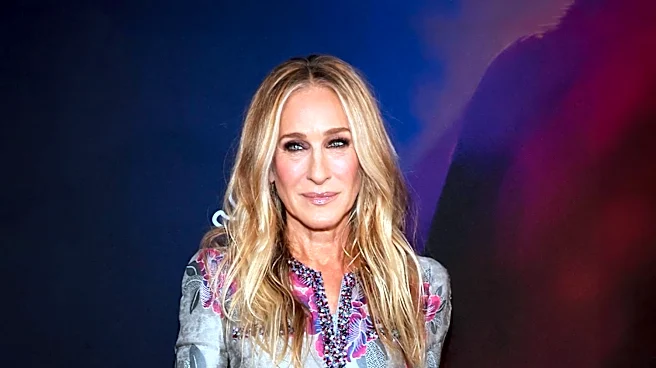
Sarah Jessica Parker, renowned for her role as Carrie Bradshaw in HBO's "Sex and the City," has publicly stated that her happy family life is her greatest achievement, surpassing her immense professional fame. In an interview with Vogue magazine, Parker clarified
the distinction between her on-screen persona and her real-life identity, emphasizing that despite playing Carrie Bradshaw for nearly 30 years, her personal lifestyle is vastly different and not driven by the spotlight. She and her husband, Matthew Broderick, maintain a private family life, raising their three children with an emphasis on hard work and discretion, deliberately avoiding media attention regarding their marriage. Parker also critically addressed the double standards faced by middle-aged women in the public eye, contrasting the praise men receive for aging naturally with the scrutiny and criticism directed at women for showing signs of aging.
Why It's Important?
Parker's statements are significant as they challenge the pervasive celebrity culture that often blurs the lines between an actor's public image and private life. Her emphasis on family values and privacy offers a counter-narrative to the constant media intrusion into personal lives, potentially influencing public perception and encouraging a more balanced view of success beyond professional accolades. Furthermore, her outspoken criticism of ageism in Hollywood and society at large highlights a critical issue affecting women, particularly in industries heavily focused on appearance. By rejecting the pressure to conform to unrealistic beauty standards and embracing natural aging, Parker contributes to a broader conversation about body positivity and gender equality, potentially empowering other women to resist similar societal pressures and fostering a more inclusive environment in entertainment and beyond.
What's Next?
Sarah Jessica Parker's continued advocacy for privacy and her stance against ageism are likely to resonate within the entertainment industry and among her audience. Her comments may encourage more public figures to speak out on similar issues, potentially leading to increased dialogue and awareness regarding the pressures faced by women in the public eye. While there are no immediate policy changes expected, her influence could contribute to a gradual shift in how media portrays and discusses aging women, fostering a more respectful and realistic approach. Her ongoing career, balanced with her commitment to family, will continue to serve as an example of navigating fame while maintaining personal values. The discussion she has ignited about societal expectations for women's appearances is expected to continue, potentially inspiring further conversations and actions within various social and professional spheres.
Beyond the Headlines
Beyond the immediate news, Parker's reflections touch upon deeper societal issues concerning identity, authenticity, and the impact of media on self-perception. Her clear delineation between her character and her true self underscores the often-misunderstood nature of celebrity, where public personas can overshadow the individual. This raises ethical questions about the media's role in shaping public opinion and the responsibility of consumers to differentiate between fiction and reality. Her critique of age-related double standards also highlights a broader cultural bias that devalues women as they age, impacting their professional opportunities and personal well-being. This conversation extends beyond Hollywood, reflecting systemic issues in how society perceives and treats aging, particularly for women. Parker's stance encourages a re-evaluation of these norms, promoting a more equitable and accepting view of aging and challenging the commercial pressures that often drive anti-aging narratives.