








What's Happening?
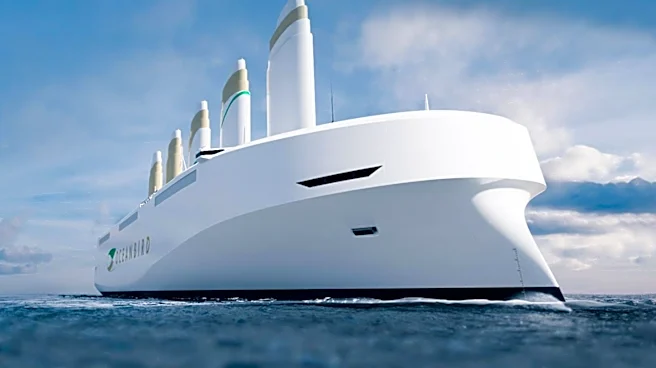
DHL, a global shipping firm, has partnered with the French startup VELA Transportation to incorporate wind power into its shipping operations. VELA is focusing on using lightweight pallets on small ships powered solely by wind, marking a shift from traditional
fossil fuel-based shipping methods. This initiative is part of DHL's broader decarbonization strategy, which includes a dedicated allotment on VELA's first vessel, expected to launch commercially next year. The partnership aims to demonstrate the viability of wind power in reducing greenhouse gas emissions in maritime shipping. VELA's ships, designed as trimarans, utilize sails for propulsion and are equipped with solar and hydrogenerators for auxiliary power needs. This approach allows them to access smaller ports and maintain competitive port-to-port timetables compared to conventional cargo ships.
Why It's Important?
The collaboration between DHL and VELA highlights a significant step towards sustainable shipping practices, potentially influencing the broader maritime industry. By integrating wind power, DHL aims to reduce its carbon footprint and promote renewable energy solutions. This move aligns with global efforts to transition away from fossil fuels and address climate change. The initiative could set a precedent for other shipping companies to explore alternative energy sources, thereby accelerating the industry's shift towards sustainability. Additionally, the partnership supports DHL's commitment to diversifying its energy portfolio and enhancing its capabilities in the renewable energy sector.
What's Next?
VELA plans to expand its fleet with four additional trimarans, enabling weekly departures and further integration of wind power into DHL's operations. This expansion could encourage other companies to adopt similar sustainable practices, potentially leading to increased investment in wind-powered shipping technologies. As the partnership progresses, it may also influence regulatory frameworks and industry standards, promoting wider acceptance of renewable energy in maritime logistics. DHL's continued focus on decarbonization, including its interest in sustainable aviation fuels and electric vehicles, suggests ongoing efforts to lead in the transition to a low-carbon economy.
Beyond the Headlines
The reintroduction of wind power in shipping not only addresses environmental concerns but also offers economic benefits by reducing dependency on volatile fossil fuel markets. This shift could enhance energy security and resilience in the shipping industry. Moreover, the use of smaller, wind-powered vessels may lead to innovations in port infrastructure and logistics, optimizing supply chains and reducing congestion at major hubs. The partnership also underscores the importance of cross-industry collaboration in achieving sustainability goals, as seen in VELA's engagement with pharmaceutical companies like Takeda, which aims to decarbonize its supply chain.