






What's Happening?
In Kern County, California, a four-story industrial heat battery developed by Rondo Energy has been operating for nearly a year, providing high-pressure steam around the clock using only solar power. This 100-megawatt-hour system, described as the largest
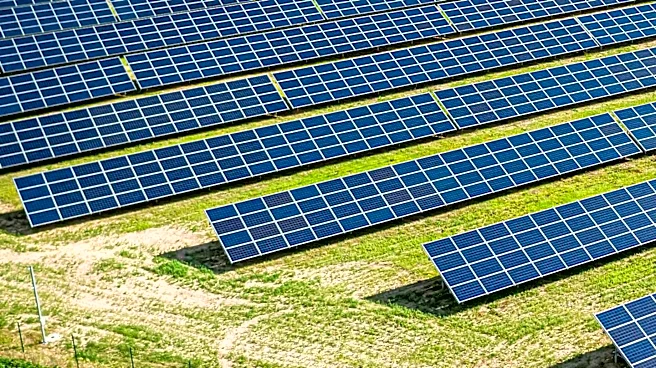
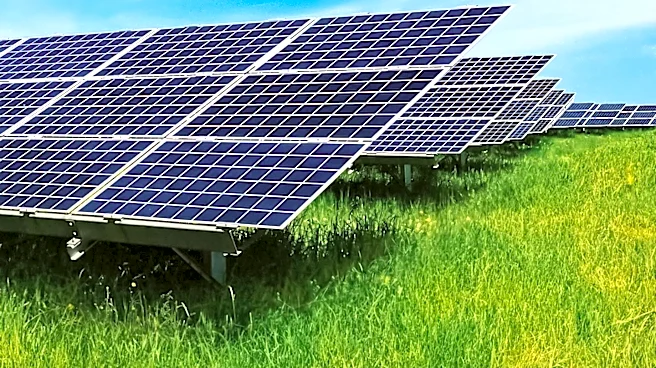
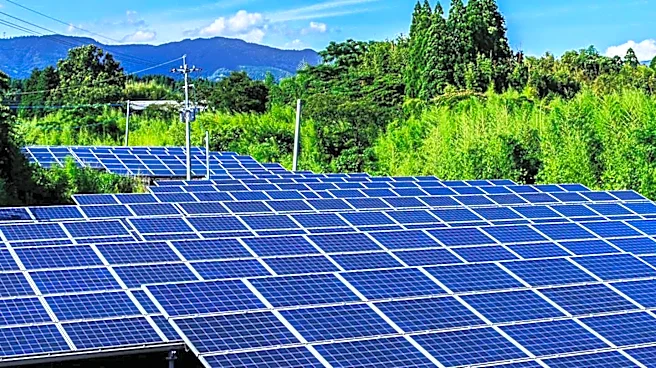
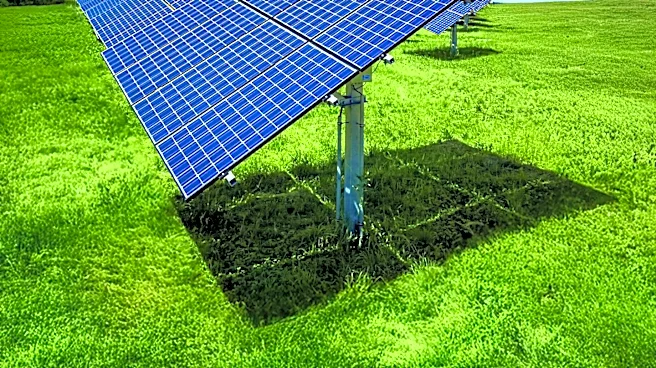
industrial heat battery on Earth, heats refractory bricks to over 1,000°C (1,832°F) during the day using electric heating elements. The stored heat is then discharged by blowing air through the hot bricks, which can be used to generate steam. The system boasts a round-trip efficiency of over 97% and loses less than 1% of its stored heat per day. Located at a Holmes Western Oil Corporation facility, the heat battery has replaced a gas-fired boiler, avoiding approximately 13,000 metric tons of CO2 per year. The facility utilizes an on-site, off-grid 20 MW solar array to charge the battery, bypassing utility rates.
Why It's Important?
This innovative heat battery system in Kern County represents a significant breakthrough for industrial decarbonization in the U.S. and globally. Industrial heat accounts for a substantial portion of global energy use, and traditionally, this has been met by burning fossil fuels. Rondo Energy's solution demonstrates a viable, high-efficiency method to provide continuous industrial heat using intermittent renewable energy sources like solar. For U.S. industries, particularly those with high heat demands such as oil and gas, cement, and chemicals, this technology offers a pathway to significantly reduce carbon emissions and operational costs, especially in states with carbon pricing or low-carbon fuel standards. It also addresses the challenge of grid curtailment of solar power by providing a means to store excess renewable energy as heat, rather than electricity, for later use, thereby enhancing grid stability and renewable energy integration.
What's Next?
The successful year-long operation of the Kern County unit has established Rondo Energy's heat battery technology at an industrial scale, leading to a growing order book globally, including projects for a cement plant in Thailand and a Heineken brewery in Portugal, and a chemical park in Germany. In the U.S., the economic viability of such systems will depend on factors like carbon pricing, available land for solar arrays, and government incentives. While federal industrial-decarbonization grants have faced setbacks, the proven technology and its ability to reduce CO2 emissions and operational costs are likely to attract further investment. Other companies, like Antora Energy, are also advancing similar hot-object storage technologies, indicating a burgeoning market for industrial heat batteries. Continued development and deployment of these systems are expected to accelerate the decarbonization of heavy industry.
Beyond the Headlines
The deployment of Rondo Energy's heat battery at an oil production facility highlights a complex but pragmatic approach to decarbonization. While the steam generated is used for enhanced oil recovery, the technology itself offers a significant reduction in emissions from the process, demonstrating that decarbonization can occur even within traditional fossil fuel industries. This raises ethical considerations about the 'greenness' of such applications, but also underscores the necessity of decarbonizing existing industries as the world transitions to cleaner energy. The technology's reliance on abundant materials like brick, rather than scarce minerals, also has long-term implications for supply chain resilience and resource sustainability. This development signals a shift in how industrial energy needs are met, moving towards solutions that are not only environmentally friendly but also economically competitive and adaptable to diverse industrial processes, potentially redefining the energy landscape for heavy industry.