






What's Happening?
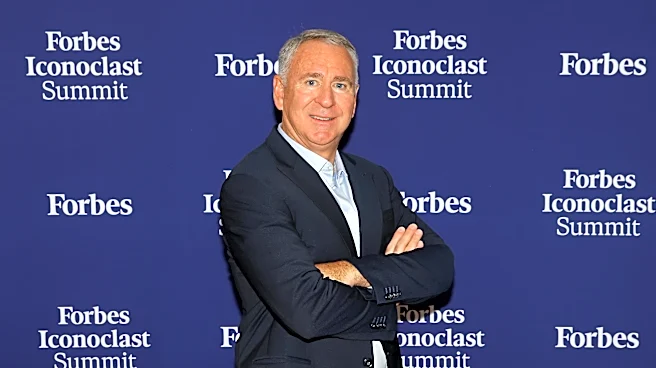
Since relocating Citadel to Miami in 2022, billionaire Ken Griffin has contributed over $2.4 billion to various local initiatives. A significant portion of this philanthropy, specifically $2 billion, is earmarked for establishing a Carnegie Mellon University
campus in the city. Griffin, who founded Citadel in 1990, has a history of substantial donations aimed at advancing education, opportunity, and health sciences. His move to Miami has been accompanied by a notable increase in his local philanthropic efforts, aiming to reshape the city's educational and economic landscape through these investments. This recent donation highlights a continued commitment to community development in his new base of operations.
Why It's Important?
Ken Griffin's substantial donation, particularly the $2 billion allocated for a Carnegie Mellon University campus, is poised to significantly impact Miami's educational and economic future. The establishment of a major university campus can attract top talent, foster innovation, and create a highly skilled workforce, potentially transforming Miami into a leading hub for technology and research. This influx of educational resources could also stimulate local businesses, increase property values, and enhance the city's overall appeal for both residents and corporations. For the U.S., such investments in higher education and urban development contribute to regional economic growth and competitiveness on a national scale, potentially drawing more investment and talent to the Southeast.
What's Next?
The next steps will likely involve the detailed planning and development of the Carnegie Mellon University campus in Miami, a process that typically requires significant coordination between the university, local government, and philanthropic organizations. This will include site selection, architectural design, curriculum development, and faculty recruitment. The long-term impact will be observed as the campus begins operations, enrolls students, and contributes to the local economy through research and job creation. Further philanthropic endeavors from Griffin in Miami could also be anticipated, given his stated commitment to local causes and his history of substantial donations.
Beyond the Headlines
Ken Griffin's philanthropic move to invest heavily in Miami, particularly in higher education, reflects a broader trend of wealthy individuals and corporations influencing urban development and educational infrastructure. This kind of private investment can accelerate the growth of specific sectors, such as technology and research, in a city. However, it also raises questions about the role of private wealth in shaping public institutions and urban planning. The establishment of a Carnegie Mellon campus could lead to significant demographic shifts, potentially increasing demand for housing and services, and altering the socio-economic fabric of Miami. This development could serve as a model or a point of discussion for other cities seeking to attract similar high-profile investments.