



What's Happening?
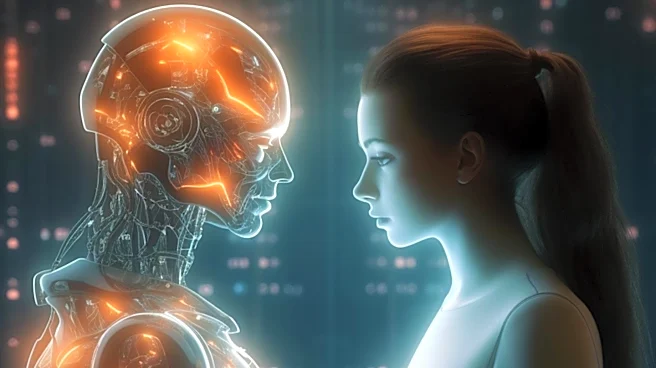
AI chatbots are increasingly being used for emotional support in relationships, but this trend is raising concerns among experts. A writer from Texas shared her experience of feeling like she was in a relationship with both her boyfriend and his AI chatbot.
This reliance on AI for emotional support can hinder empathy and communication between partners. A Pew Research Center survey found that one in five adults aged 18 to 29 have used AI chatbots for emotional support. Experts warn that while chatbots can help organize thoughts and prepare for difficult conversations, they can also lead to excessive validation, making it harder for users to empathize with their partners. This shift in relational dynamics could have significant long-term impacts on human relationships.
Why It's Important?
The increasing use of AI chatbots in personal relationships highlights a significant shift in how individuals seek emotional support. This trend could have profound implications for interpersonal communication and emotional intelligence. As people turn to AI for validation, they may become less adept at handling real-life interactions that require empathy and compromise. This could lead to weakened relationship skills and increased emotional distance between partners. The potential for AI to act as a 'third party' in relationships raises ethical questions about privacy and emotional fidelity. As AI becomes more integrated into daily life, understanding its impact on human relationships will be crucial for maintaining healthy social dynamics.
What's Next?
As AI continues to evolve, its role in personal relationships is likely to expand. Couples may need to establish guidelines for AI use, such as whether it's acceptable to discuss relationship issues with chatbots. Experts suggest that AI should be used as a tool for reflection rather than a substitute for direct communication with partners. Future research and discussions will likely focus on developing best practices for integrating AI into personal relationships without compromising emotional intimacy. Policymakers and mental health professionals may also need to address the ethical implications of AI's role in human interactions.
Beyond the Headlines
The integration of AI into personal relationships could lead to broader societal changes. As individuals become more reliant on AI for emotional support, there may be a cultural shift towards valuing efficiency and validation over empathy and understanding. This could impact how future generations perceive and engage in relationships. Additionally, the use of AI in personal contexts raises questions about data privacy and the potential for misuse of sensitive information. As AI technology advances, it will be important to consider the long-term cultural and ethical implications of its role in human relationships.