
What's Happening?
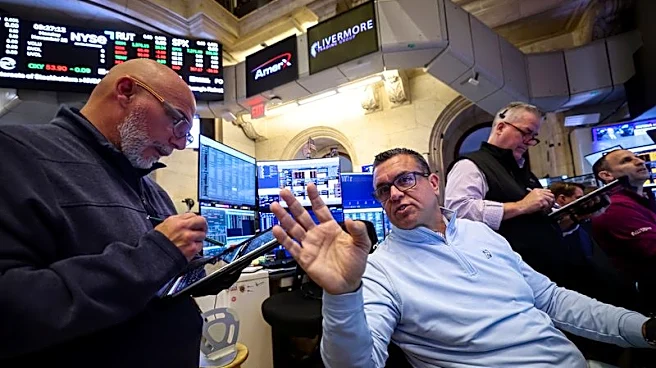
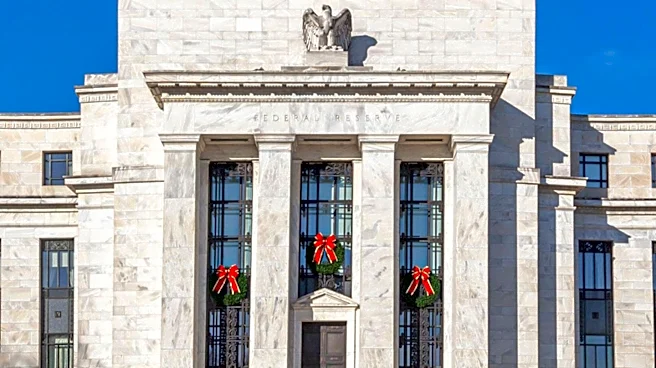
Federal Reserve Chairman Kevin Warsh's strategy for interest rate hikes is facing a significant test due to recent volatility in the artificial intelligence (AI) stock market. Following a brief period
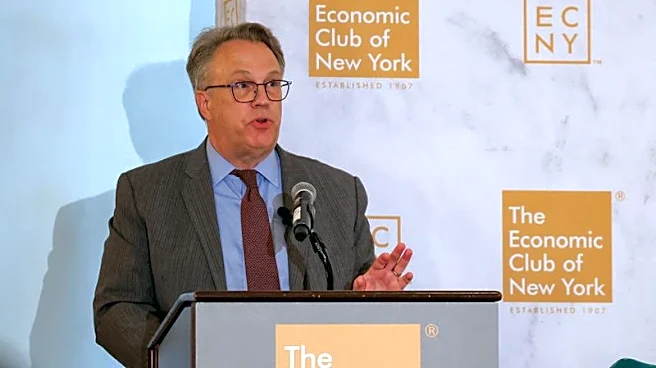
where Wall Street anticipated an easing of rate hikes after a stock market downturn, a subsequent rebound, partly attributed to Jensen Huang's reinstatement at Nvidia, has reignited expectations for at least two more rate increases. Despite this rebound, AI stocks remain below their previous highs, making the sector's instability a critical factor for the central bank's monetary policy. Krishna Guha, head of central banking and the economy for Evercore ISI, noted that while AI stress isn't solely due to the Fed, its occurrence during rate hikes is not coincidental, and Warsh's silence during market swings is creating uncertainty among investors. Warsh had previously adopted a middle-ground approach, acknowledging tightened financial conditions but stopping short of calling them 'tight,' while also signaling close observation of the AI sector and its connection to interest rates.
Why It's Important?
The current market dynamics present a crucial challenge for the Federal Reserve's monetary policy and its impact on the U.S. economy. The debate on Wall Street centers on whether Chairman Warsh's focus on financial conditions will temper the central bank's hawkish stance or if the inflation target will compel continued rate hikes into a potentially fragile market. The volatility in the AI sector, a significant driver of recent economic growth and investment, could have broader implications for market stability and investor confidence. Uncertainty regarding the Fed's future actions, exacerbated by differing views among Fed officials and Warsh's silence, can lead to increased market speculation and potentially hinder investment and economic planning. The outcome of this test will influence borrowing costs for businesses and consumers, affecting various sectors of the U.S. economy beyond just technology.
What's Next?
Investors are closely analyzing the divided commentary from Federal Reserve officials and past statements from Chairman Warsh to anticipate the central bank's next moves. The market is currently grappling with the possibility of further rate hikes, with some officials advocating for aggressive increases, while others caution against 'dramatic action.' The ongoing performance of the AI sector and broader financial conditions will likely be key determinants in the Fed's upcoming decisions. The central bank's communication strategy, particularly from Chairman Warsh, will be critical in providing clarity and managing market expectations. Any future rate adjustments will have direct consequences for the cost of capital, potentially influencing corporate investment, consumer spending, and the overall trajectory of economic growth in the United States.
Beyond the Headlines
The situation highlights a growing intersection between technological advancements, specifically in AI, and traditional monetary policy. The rapid evolution and significant investment in AI are creating new complexities for central banks, as the sector's performance can have outsized effects on overall market sentiment and economic indicators. The challenge for the Federal Reserve extends beyond managing inflation and employment to understanding and responding to the unique dynamics of a rapidly innovating tech sector. This scenario could set a precedent for how central banks integrate the impact of emerging technologies into their policy frameworks, potentially leading to new analytical tools or considerations for assessing economic health and stability in an increasingly technology-driven economy. The 'hiring recession' linked to AI, as mentioned in related discussions, further underscores the multifaceted impact of AI on the U.S. labor market and economic policy.