





What's Happening?
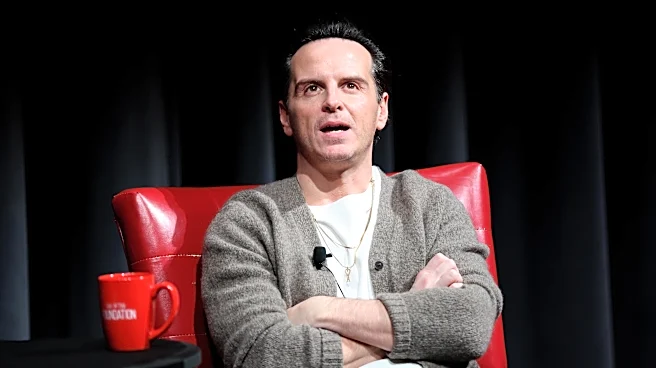
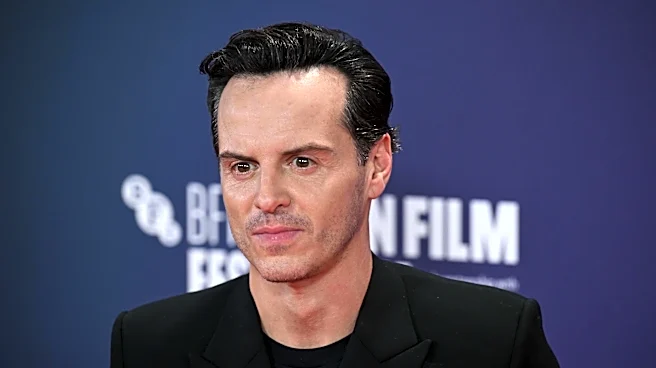
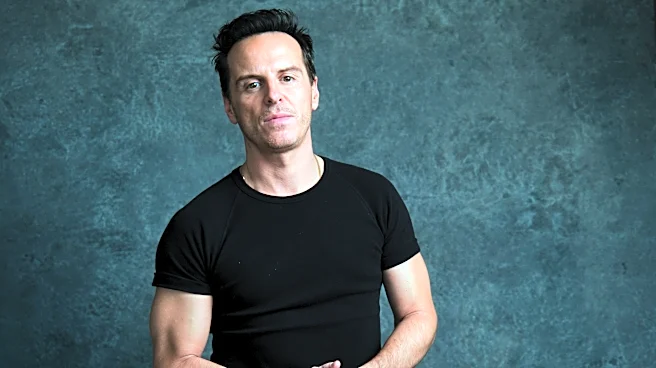
The new film 'Elsinore' features a critically acclaimed performance by Andrew Scott as Ian Charleson, an actor playing Hamlet at Britain's National Theatre who is also dying of AIDS in 1989. Scott's portrayal is described as searing and unforgettable,
particularly in moments where the film trusts his acting without excessive dramaturgical embellishments. However, the movie itself is criticized for not consistently trusting its lead actor, often employing 'training wheels' such as an insistent score and scenes designed to elicit tears, which detract from the raw emotional power of Scott's performance. The film also struggles with its narrative choices, including a scene where Ian seemingly convinces activist Derek Jarman to accept his decision not to come out, a choice deemed 'mind-boggling' by the reviewer. Despite these issues, Scott's ability to convey complex emotions and his dedication to the role of Hamlet are highlighted as the film's strongest elements.
Why It's Important?
This review highlights a common challenge in filmmaking: balancing a powerful central performance with overall directorial vision. For the entertainment industry, it underscores the importance of directorial restraint and trust in an actor's capabilities, especially when dealing with sensitive and emotionally charged subjects like the AIDS crisis. A film's failure to fully leverage its strongest assets can impact its critical reception and audience engagement, potentially affecting box office performance and awards consideration. For actors like Andrew Scott, such a performance, even within a flawed film, can solidify their reputation and open doors for future roles, demonstrating their capacity for profound character work. The critique also touches on the portrayal of historical social issues, suggesting that missteps in narrative can undermine the authenticity and impact of such stories.
Beyond the Headlines
The film's portrayal of the AIDS crisis in 1989, particularly the 'lacerating, pitch-black humor that queer folk adopt as psychic armor,' offers a glimpse into the coping mechanisms and community dynamics during a period of immense suffering and social stigma. The critique regarding the film's handling of Ian's decision not to come out, especially in a scene with Derek Jarman, raises questions about historical accuracy and the responsibility of filmmakers when depicting real-life figures and social movements. It suggests a potential ethical dilemma in altering historical narratives for dramatic effect, particularly when it concerns the agency and experiences of marginalized communities. The review implicitly argues for a more authentic and less sentimental approach to such sensitive topics, allowing the inherent emotional weight of the story and performances to resonate without artificial amplification.