








What's Happening?
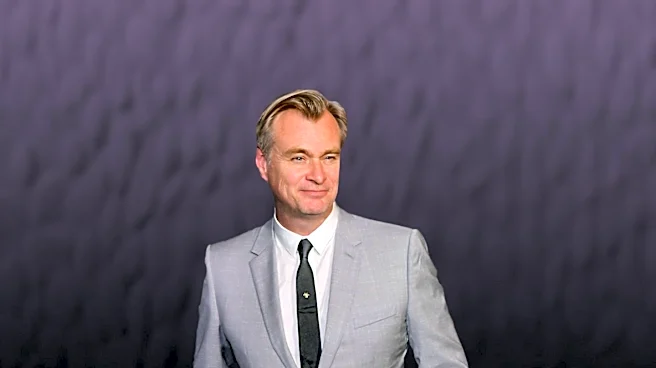
Christopher Nolan, a renowned filmmaker, has expressed his belief that Hollywood studios should embrace risk-taking in their blockbuster films to captivate audiences seeking fresh and innovative content. In a recent interview with The New York Times,
Nolan emphasized that playing it safe in mainstream movies often fails to resonate with viewers. He recounted his experience with his 2000 film 'Memento,' which was initially a challenging sell due to its unconventional backward narrative structure. Despite initial skepticism, the film eventually found its audience, validating Nolan's approach. He also mentioned his upcoming film 'The Odyssey,' which similarly takes creative risks, hoping it will be well-received by audiences.
Why It's Important?
Nolan's perspective highlights a critical discussion in the film industry about the balance between creative innovation and commercial viability. His call for risk-taking challenges the prevailing trend of formulaic blockbusters that prioritize financial safety over artistic exploration. This approach could potentially lead to a more diverse and engaging cinematic landscape, offering audiences unique experiences. For studios, embracing such risks could mean tapping into new markets and demographics, ultimately benefiting the industry's growth. However, it also poses financial challenges, as unconventional films may not always guarantee box office success, requiring a delicate balance between creativity and profitability.
What's Next?
As Nolan continues to advocate for creative risks, it remains to be seen how Hollywood studios will respond. If 'The Odyssey' succeeds, it could encourage more filmmakers and studios to pursue innovative projects. This shift might lead to a broader acceptance of diverse storytelling methods, potentially reshaping industry standards. Studios may need to reassess their strategies, considering both audience demand for novelty and the financial implications of riskier projects. The industry's response could influence future trends in filmmaking, impacting how stories are told and consumed.