





What's Happening?
Gardeners are being advised to scale back certain maintenance tasks in August, specifically frequent watering and fertilizing, to promote a low-effort late summer garden. According to Christina Stembel of Farmgirl Flowers and homesteader Lindsey Chastain,
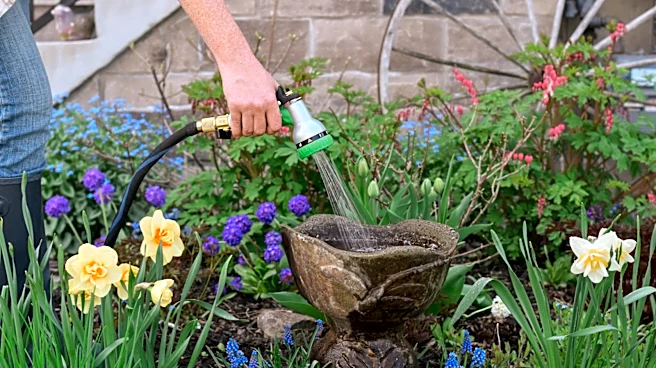
many perennials begin preparing for dormancy in August and do not require as much attention. Overwatering can lead to issues such as powdery mildew, root rot, and an abundance of mushrooms, as noted by landscape designer Ellie Black. Instead of frequent watering, Black recommends adjusting automated systems to water deeply but less often. Similarly, fertilizing during the hottest months can burn plant roots and make foliage susceptible to damage, as plants are focused on survival rather than growth. Experts suggest focusing on providing adequate moisture and shade, and reserving fertilizer until early spring when plants enter their active growth season.
Why It's Important?
This guidance is important for promoting sustainable gardening practices and reducing unnecessary resource consumption, particularly water, during late summer. By advising against frequent watering, experts are encouraging more efficient water use, which is crucial in regions experiencing drought or water scarcity. Reducing fertilizer application not only prevents potential harm to plants but also minimizes the runoff of chemicals into local water systems, contributing to environmental protection. For home gardeners, adopting these low-effort strategies can save time and resources, making gardening more accessible and enjoyable. It also encourages a more natural approach to plant care, aligning with ecological principles that support plant dormancy cycles and local wildlife by leaving some seed heads for birds.
What's Next?
Gardeners are encouraged to implement these recommendations immediately for the remainder of August. This involves checking soil moisture before watering, adjusting irrigation systems for deeper but less frequent watering, and completely pausing fertilizer application for perennials. Instead, focus should be placed on protecting sensitive plants with shade cloth and using mulch to help retain soil moisture and regulate temperature. Looking ahead, gardeners can use this period to plan for next year's spring garden, incorporating lessons learned about plant needs during late summer. The shift towards more sustainable and less intensive gardening practices is likely to continue, with an emphasis on understanding plant cycles and environmental conditions to optimize care.
Beyond the Headlines
The advice to reduce gardening interventions in August reflects a broader trend towards more ecological and sustainable living practices. It highlights a growing understanding that nature often thrives with less human interference, especially when plants are naturally entering a dormant phase. This approach can foster greater biodiversity in gardens by allowing seed heads to remain, providing food and shelter for wildlife. Ethically, it encourages a more respectful relationship with plants, recognizing their natural cycles rather than constantly pushing for growth. Culturally, it challenges the notion that constant intervention is necessary for a healthy garden, promoting a more relaxed and observant approach to horticulture that aligns with environmental conservation efforts.