




What's Happening?
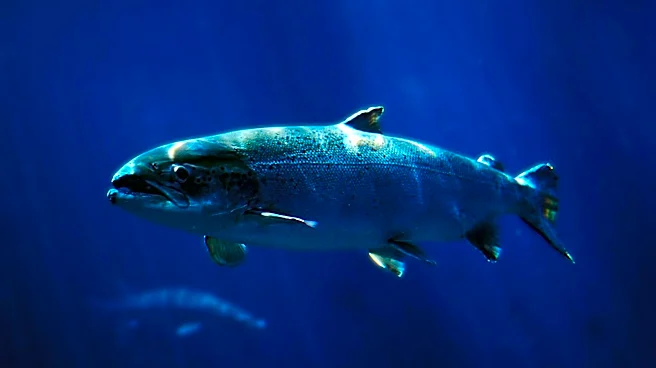
Recent research has revealed that lighting in fish farms can significantly affect the welfare of salmon. Traditionally, it was assumed that salmon received the correct amount of light based on the lamp's power, but new findings suggest that the sensory
cells in fish eyes react differently to light than human eyes. Researchers at SINTEF Ocean have developed a method to measure light from the fish's perspective, focusing on melanopic irradiance, which affects the salmon's circadian rhythm. This breakthrough allows for a more accurate assessment of how light impacts salmon, potentially improving their growth and well-being. The aquaculture industry, which heavily relies on light as a biological driver, can now use this information to better control light conditions in hatchery facilities, ensuring that they align with the natural rhythms of the fish.
Why It's Important?
The findings are crucial for the aquaculture industry, which is a significant part of the global food supply chain. By understanding how light affects salmon, fish farms can optimize conditions to improve fish welfare, reduce stress, and enhance growth rates. This could lead to more sustainable and efficient fish farming practices, potentially reducing mortality rates and increasing production. The research also highlights the importance of considering the biological needs of farmed animals, which can lead to better animal welfare standards and more ethical farming practices. As the demand for seafood continues to rise, these insights could help meet global food needs while maintaining ecological balance.
What's Next?
The research team plans to conduct further testing to refine their understanding of how different light spectra affect salmon. They are also developing a handbook to guide the aquaculture industry in implementing these findings. This handbook will provide best practices for using light in fish farming, helping producers to adopt more biologically relevant lighting standards. As the industry adopts these new practices, it is expected that there will be a shift towards more sustainable and welfare-oriented fish farming methods. The ongoing research and its applications could set new standards for aquaculture worldwide.