







What's Happening?
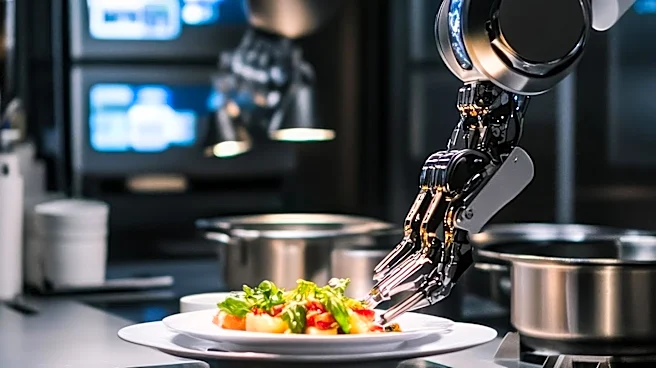
JD.com has launched CHEFRESH, a new platform that integrates AI-powered meal planning with robotic cooking hardware designed for home use. This development signifies a broader trend of connected automation moving from industrial settings, such as warehouses
and manufacturing floors, into everyday consumer environments. The CHEFRESH system bundles software intelligence with physical cooking automation, reflecting a growing inclination for companies to manage the entire hardware-software stack rather than relying on separate systems. This innovation aims to create a direct, data-rich link between consumer demand signals and upstream food logistics networks, offering a more granular view of ingredient consumption beyond traditional purchasing data.
Why It's Important?
The introduction of robotic cooking systems like CHEFRESH has significant implications for U.S. supply chains and the broader automation industry. It indicates that technologies previously confined to industrial applications, such as sensors, computer vision, edge computing, and AI-driven decision-making, are increasingly being adapted for consumer products. This shift means supply chain teams will need to consider how these connected devices, which rely on complex networks of sensors, chips, software, and logistics, will impact their operations. The data generated by such systems could provide more accurate demand signals, potentially leading to more efficient inventory management and reduced waste in food supply chains. Furthermore, it highlights the growing importance of vertical integration, where hardware and software are developed in tandem, influencing how businesses evaluate automation investments and manage component dependencies.
What's Next?
The expansion of consumer robotics into areas like home cooking suggests that supply chain leaders will need to closely monitor these developments. Future steps for businesses may include re-evaluating their hardware and software integration strategies, understanding the component dependencies of connected devices, and leveraging the operational data generated by automated equipment. As the line between consumer and industrial robotics blurs, companies might find early indicators of future automation trends in the consumer market. This could lead to a more complex hardware strategy that accounts for the convergence of these technologies, potentially influencing how products are designed, manufactured, distributed, and supported across various sectors.
Beyond the Headlines
The rise of connected kitchens and robotic cooking systems like CHEFRESH touches upon deeper societal and economic shifts. Ethically, it raises questions about data privacy and the extent to which consumer behavior data, such as ingredient consumption, will be collected and utilized. Culturally, it could alter traditional cooking practices and family dynamics around meal preparation, potentially leading to new forms of convenience but also a detachment from culinary skills. Economically, it could create new markets for specialized hardware, software, and support services, while also impacting existing industries, from appliance manufacturing to food retail. The long-term implications include a potential for increased efficiency and reduced waste in the food system, but also challenges related to technological accessibility and the digital divide.