
What's Happening?
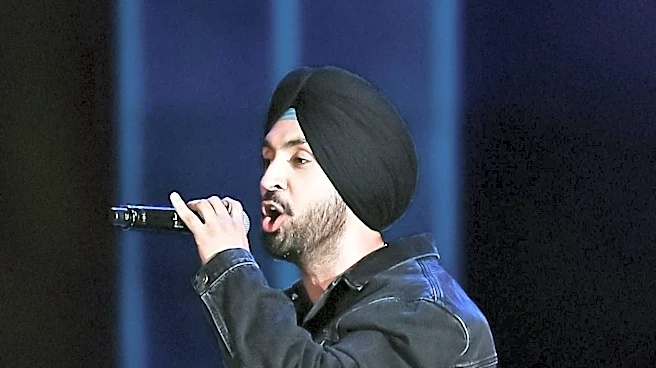
Singer Diljit Dosanjh publicly questioned the restrictions placed on his song lyrics during his concert at Ahmedabad's Narendra Modi Stadium. He highlighted what he perceives as double standards, comparing the objections he faces for songs referencing
alcohol and substance use to the lack of controversy when international artists like Coldplay perform similar content. Dosanjh specifically referenced Coldplay's song 'Hymn for the Weekend,' which includes the line 'I'm feeling drunk and high,' noting that their performance at the same venue last year did not draw similar criticism. He expressed confusion as to why Indian artists are subjected to such scrutiny while foreign acts are not, emphasizing his Indian heritage and the Indian musicians in his band. His remarks came amidst demands from Dr. Pandit Rao Dharennavar, an associate professor, to prevent Dosanjh from performing four specific songs due to their alleged promotion of alcohol, drugs, and gun culture, with threats of legal action if the demands are not met.
Why It's Important?
This situation brings to light a significant debate regarding artistic freedom, cultural double standards, and censorship in the entertainment industry. Dosanjh's comments underscore a perceived disparity in how content from international artists is received versus that of local artists, potentially impacting creative expression and fair treatment within the music scene. The controversy also highlights the ongoing tension between artistic liberty and societal concerns about the influence of song lyrics on public behavior, particularly among younger audiences. If such restrictions become more prevalent or are applied inconsistently, it could lead to a chilling effect on artists, prompting self-censorship and limiting the diversity of musical themes. This could also spark broader discussions about regulatory frameworks for artistic content and whether they are applied equitably across all performers, regardless of their origin.
What's Next?
The immediate next steps involve observing whether Diljit Dosanjh will face further legal challenges or public backlash for his performance and his statements. Dr. Pandit Rao Dharennavar has threatened to approach the Gujarat High Court if Dosanjh performs the objected-to songs, which could lead to legal proceedings and potentially set precedents for future artistic performances in India. This incident may also prompt other artists and industry stakeholders to voice their opinions on censorship and double standards, potentially leading to a wider debate on artistic freedom. Furthermore, event organizers and venue management might face increased pressure to review their policies regarding song content, especially for performances by both local and international artists, to ensure consistency and avoid future controversies.
Beyond the Headlines
Beyond the immediate controversy, this event touches upon deeper issues of cultural identity and post-colonial attitudes in the arts. The perceived leniency towards Western artists performing content that is deemed problematic when performed by local artists could reflect ingrained biases or a different set of cultural expectations. It raises questions about whether certain themes are considered more acceptable when presented by foreign acts, potentially due to a perceived 'exoticism' or a different cultural context that is not applied to local artists. This situation could also fuel discussions about the role of artists in society, their responsibility in shaping public discourse, and the boundaries of artistic expression in a diverse cultural landscape. The outcome of this debate could influence how artistic content is regulated and consumed, potentially leading to a re-evaluation of cultural policies and artistic freedoms.