

What's Happening?
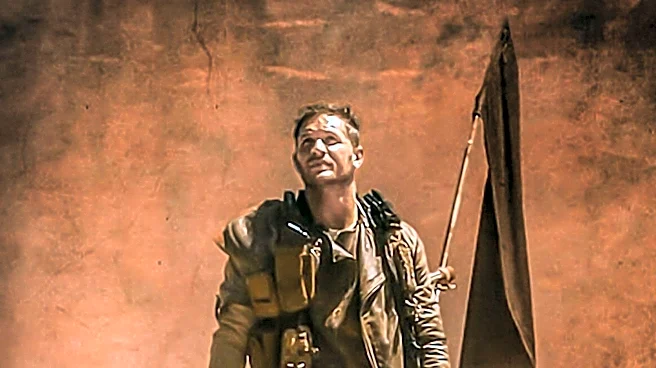
Charlize Theron recently revisited her experiences during the filming of 'Mad Max: Fury Road,' acknowledging the significant on-set tensions with co-star Tom Hardy. Despite the film's critical acclaim, box office success, and six Oscar wins, the production
was marked by considerable disagreements between the two lead actors. Director George Miller previously noted their contrasting work methods, with Hardy being more instinctive and Theron highly disciplined. A notable incident involved Hardy arriving two hours late for a shoot, prompting Theron, who was ready on time, to demand he be fined for every minute of delay. Theron likened their relationship during filming to 'two parents fighting in the front seat of a car' and expressed regret, stating that both should have acted more professionally. The two actors have not worked together on any project since 'Mad Max: Fury Road.' Theron also spoke about the cultural impact of her character, Furiosa, and the personal connection she developed with the role, having her daughter on set during the six-month shoot in Namibia.
Why It's Important?
This revelation offers a candid look into the often-glamorized world of Hollywood film production, highlighting the challenges that can arise even on highly successful projects. The dynamic between lead actors can significantly influence a film's atmosphere and production efficiency, potentially impacting budgets and timelines. For the entertainment industry, such public acknowledgments of on-set conflicts can shape perceptions of actors and their professional conduct, influencing future casting decisions and collaborations. It also underscores the pressure on actors to deliver compelling performances despite personal or professional friction, demonstrating the complex interplay between artistic vision and human relationships in creative endeavors. The enduring success of 'Mad Max: Fury Road' despite these internal struggles also serves as a case study on how a strong directorial vision and a compelling narrative can sometimes transcend behind-the-scenes difficulties.
What's Next?
While Theron and Hardy have not collaborated since 'Mad Max: Fury Road,' their individual careers continue to thrive. Theron's reflections may prompt further discussions within the industry about managing on-set conflicts and fostering healthier working environments, especially given the increasing scrutiny on workplace conduct in Hollywood. Future projects involving either actor will likely be viewed through the lens of these past experiences, with audiences and industry professionals alike observing their interactions with co-stars and production teams. The ongoing legacy of 'Mad Max: Fury Road' as a cinematic achievement remains, but these insights add a layer of human complexity to its production story. The upcoming 'Furiosa' prequel, without Theron or Hardy, will also be watched to see how it builds on the original's legacy without the original cast's dynamic.
Beyond the Headlines
The candidness of Theron's remarks delves into the psychological toll that intense film productions can take on actors, particularly when coupled with demanding roles and challenging co-star relationships. It raises questions about the support systems available to actors during such high-pressure situations and the industry's responsibility to mediate and prevent such conflicts from escalating. Furthermore, the differing work styles described by Director Miller—Hardy's instinctive approach versus Theron's disciplined method—highlight a fundamental tension in creative processes: the balance between spontaneous artistry and meticulous planning. This dynamic is not unique to filmmaking but is present across various creative fields, illustrating how different approaches can clash, yet sometimes, paradoxically, contribute to a powerful final product. The public's fascination with such behind-the-scenes drama also reflects a broader interest in the human element of artistic creation.