







What's Happening?
Stellantis, the multinational automotive company formed from the merger of Fiat Chrysler Automobiles (FCA) and PSA Group, is experiencing significant shareholder discontent regarding CEO compensation and the company's strategic direction. Shareholders
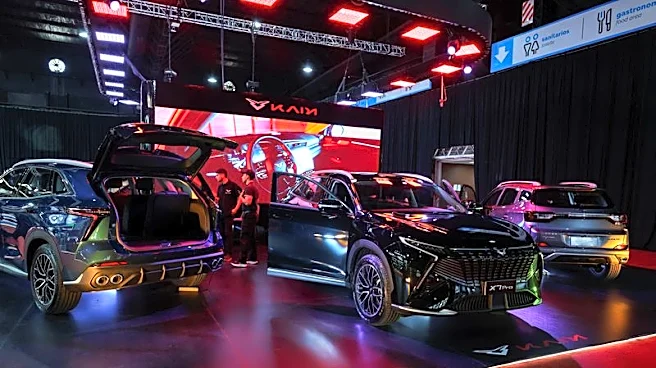
are questioning the substantial remuneration of CEO Tavares, particularly in light of perceived 'wrong decisions' and a focus on short-term stock prices over long-term quality and customer acceptance. Critics argue that the board's approach to executive compensation lacks sufficient performance ties, leading to overcompensation for what some describe as 'mediocre CEOs.' There is concern that cost-cutting measures, potentially impacting quality and customer satisfaction, are being prioritized to boost immediate stock performance. The discussion also touches upon the potential for Chinese automakers to enter the U.S. market, leveraging existing dealer networks and assembly plants, especially for electric vehicles, if current brands like Chrysler and Dodge are not strategically repositioned.
Why It's Important?
This situation highlights a broader issue within corporate governance in the U.S. and Europe, where executive compensation packages are often criticized for being detached from genuine long-term company performance and accountability. The focus on short-term stock prices, driven by certain 'pay for performance' plans, can incentivize decisions that may undermine product quality, customer loyalty, and ultimately, the company's sustainable growth. For Stellantis, a major player in the U.S. automotive market, these internal struggles could impact its competitive standing, particularly as the industry shifts towards electric vehicles. If brands like Dodge and Chrysler are not effectively integrated into an EV strategy, it could create opportunities for new entrants, including Chinese manufacturers, to gain a foothold in the U.S. market, potentially altering the competitive landscape and consumer choices.
What's Next?
Shareholder pressure on Stellantis's board is likely to continue, potentially leading to calls for reforms in executive compensation structures and greater accountability for strategic outcomes. The company may need to address concerns about its brand strategy, particularly for Dodge and Chrysler, to ensure their relevance in the evolving automotive market, especially concerning electric vehicles. The debate over the balance between cost-cutting and long-term investment in quality and customer acceptance will remain central. The potential for Chinese automakers to capitalize on any perceived weaknesses in Stellantis's U.S. market strategy could also accelerate, prompting the company to re-evaluate its competitive defenses and innovation efforts.
Beyond the Headlines
The criticism leveled against Stellantis's executive compensation and strategic choices reflects a growing societal debate about corporate responsibility and the equitable distribution of wealth within large corporations. It raises questions about the effectiveness of current corporate governance models in aligning executive incentives with the long-term interests of all stakeholders, including employees, customers, and the broader economy. The discussion also underscores the increasing global competition in the automotive sector, particularly from emerging markets like China, which could challenge established players in the U.S. market. This could lead to a re-evaluation of manufacturing strategies, supply chains, and brand positioning across the industry, with potential implications for employment, technological innovation, and consumer access to diverse vehicle options.