








What's Happening?
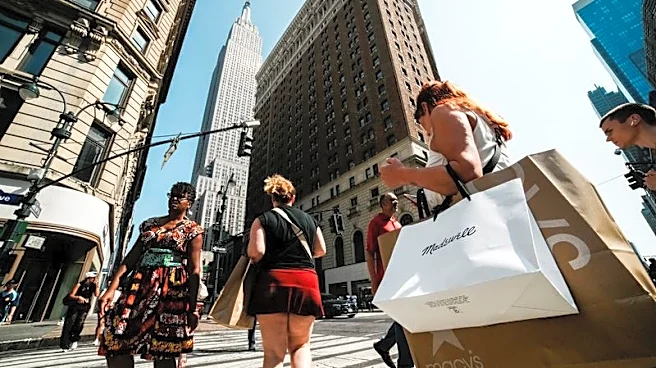
Retail sales in the United States continued to grow in May, with a 0.9% increase from April, as reported by the U.S. Census Bureau. This growth is supported by a resilient labor market and consumer willingness to spend, despite challenges such as elevated
gas prices and geopolitical tensions in the Middle East. The National Retail Federation (NRF) highlighted that consumers are prioritizing essential goods and finding ways to manage their budgets as the benefits of large tax refunds begin to fade. The data shows increases across various retail segments, including electronics, clothing, and health stores, indicating broad-based consumer engagement.
Why It's Important?
The sustained growth in retail sales underscores the strength of the U.S. economy, driven by consumer spending. This trend is crucial as it reflects consumer confidence and economic stability, even amid external pressures. Retailers are actively working to keep prices affordable, which is vital for maintaining consumer spending levels. The ongoing growth in retail sales could influence economic policy decisions, particularly regarding interest rates, as the Federal Reserve balances inflation concerns with economic growth.
What's Next?
As the effects of tax refunds diminish, consumer spending patterns may shift, potentially impacting retail sales growth. Retailers will need to continue adapting to changing consumer preferences and economic conditions. The Federal Reserve will likely monitor these trends closely to inform future monetary policy decisions. Additionally, the resolution of geopolitical tensions, such as the conflict in the Middle East, could further stabilize economic conditions and influence consumer behavior.