





What's Happening?
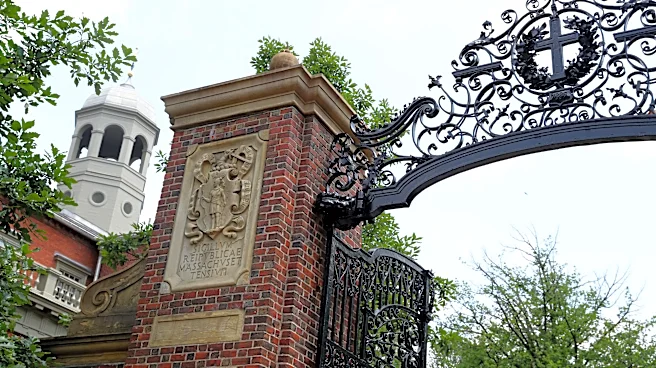
Harvard University's Humanities 10 course, known for its demanding curriculum, includes James Joyce's modernist novel 'Ulysses' as a key text. This course requires students to read a substantial book each week and write regular essays, with no pass/fail
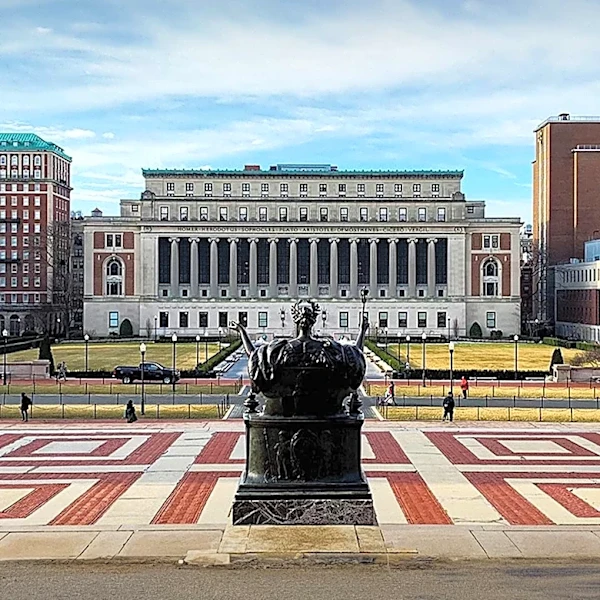
option and a strict no-digital-devices policy. The syllabus for Humanities 10 is comprehensive, spanning ancient epics like Homer's 'The Odyssey' and 'The Iliad,' alongside works from authors such as Shakespeare, Dante, and contemporary figures like James Baldwin. 'Ulysses' is specifically scheduled for two weeks in the Spring 2027 semester. The course, established in 2008 by English professors Stephen Greenblatt and Louis Menand, aims to combat declining student interest in the humanities by offering a rigorous intellectual foundation, drawing parallels to similar programs at Columbia and Yale. Despite its intensity, Humanities 10 has seen a surge in demand, accepting only 90 freshmen annually.
Why It's Important?
The prominence of 'Ulysses' in Harvard's Humanities 10 curriculum underscores a broader trend in higher education to re-emphasize foundational literary works and critical thinking skills. In an era where digital shortcuts and AI summaries are increasingly prevalent, the course's strict adherence to traditional reading and writing methods highlights a commitment to deep engagement with complex texts. This approach challenges students to develop analytical abilities and intellectual discipline, which are crucial for navigating an information-saturated world. The high demand for such a rigorous course suggests a student appetite for substantive academic challenges, potentially influencing other institutions to reconsider the depth and breadth of their humanities offerings. Furthermore, the inclusion of a challenging novel like 'Ulysses' reinforces its enduring literary significance and its role in shaping modern thought and narrative structures.
What's Next?
The continued popularity and rigorous nature of Harvard's Humanities 10 course, featuring works like 'Ulysses,' could inspire other universities to strengthen their core humanities programs. This might lead to a renewed focus on classic literature and intensive reading and writing requirements across various disciplines. As discussions around the role of AI in education evolve, the success of a course that explicitly bans digital devices and encourages deep textual engagement may serve as a model for fostering genuine intellectual development. Future academic discourse may increasingly highlight the value of such demanding curricula in preparing students for complex professional and civic roles, potentially influencing curriculum design and pedagogical approaches in higher education nationwide.
Beyond the Headlines
The emphasis on 'Ulysses' and other challenging texts in Harvard's Humanities 10 course reflects a deeper cultural conversation about the value of difficulty and sustained intellectual effort in an age of instant gratification. The course's design implicitly argues that true understanding and personal growth often arise from grappling with complex ideas and demanding tasks, rather than seeking shortcuts. This pedagogical philosophy challenges the notion that education should always be streamlined or made easier, suggesting that the 'difficulty is their value.' This approach could foster a generation of thinkers more adept at critical analysis and less reliant on superficial information, potentially influencing broader societal attitudes towards learning, problem-solving, and the appreciation of cultural heritage.